.comment-link {margin-left:.6em;}

Fruit Blog Header.jpg
APPLES - BRAMBLES - CITRUS - GRAPES - NUTS - PAWPAWS - PEARS - PERSIMMONS - STONE FRUITS - STRAWBERRIES - FORUM

Cherimoya
My cherimoya, shortly before it became smoothie fodder.

Archive of past images


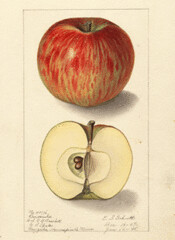
AppleBorovinka


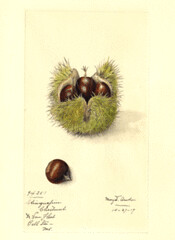
Chinquapin

Recent Cultivar Releases
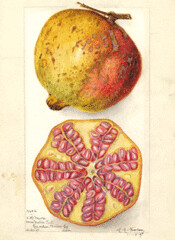
Pomegranate

Current Work in Pomology

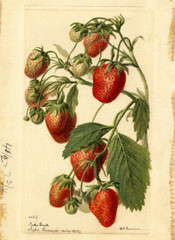
StrawbParkerEarle


QuinceBourgeat


Atom Feed

Powered by Blogger

Add to Technorati Favorites

March 6, 2010

Trees of Endangeredstan

Central Asia is possibly the region of the world least on most people's radar (despite its proximity to that perennial focus, the Middle East), but it is a center of diversity for many, many fruit crops, and as such has genetic resources which could prove critical for future breeders of such things as apples, almonds, walnuts, peaches, pomegranates and many other crops. It also has environmental degradation, unstable governments, and widespread poverty, which threaten those resources, many of which have never made it out of the region thanks to nearly a century of Soviet rule and isolation.

Flora & Fauna International has compiled a "Red List" of endangered fruit and nut species in the area. Critically endangered species include pears, hawthorns, currants, and barberries. Some of these things are down to a single tiny population.

Red List of Trees of Central Asian

An interesting read about a bunch of species I at least hadn't heard much (or anything) about.

Labels: , , , , , , , ,

A Life of Apples

Seems like I spend a lot of time talking about apples here, which is sort of odd, considering that I've actually never worked with them, and I talk much less about some of the crops I have worked with. But part of why apples keep coming up is that they seem to possess a special place in our culture and our history.

During my months away from this site I stumbled across an apple blog, which I read for a bit, planned on posting here, and then promptly forgot about it as work and travel took me away from the Internet. Then today I realized that the "Chris" who commented here the other day is none other than the author of that blog

A Life of Apples

A Life of Apples features a number of profiles of cultivars, all interesting and well done, which is how I found it, but also touches on the historical and mythological aspects of apples, as well as yoga, recipes, and more. A definite addition to the sidebar.

Labels: , , , ,

March 3, 2010

Thanks...

Aww...thanks guys. It's nice to feel missed. I can't make any promises, but as spring starts to sneak up I feel myself thinking more of the wonders of the fruit world beyond my own job...

Oh, and Adam...just call me "Evil". I consider us colleagues.

And Japanese Comment Spam Guy...thank you for standing by me through all the unproductive months. While other people remained silent as I posted nothing, you kept up a steady dialog with yourself and all those people who would click on a random link labeled "SEX" in the midst of a block of Japanese. Thank you for steadfast faith in my blog and the fact that I was far too lazy to delete you on a regular basis.

(Blogger appears broken at the moment, so you get this as a post, not a comment).

In the meantime, have another Canadian 'Red Prince' article.

How do you like them apples? (Canadian Business)

More later, promise.

Labels: , , ,

February 24, 2010

The Red Prince (or: Just in case you thought I'd died)

Just came across this article on a new(ish) apple variety and thought it was kind of interesting...always happy to see these sort of things appearing in the mainstream press, even if it comes with the obligatory discussion of HoneyCrisp which I'm getting a tad tired of.

The invention of an apple: The Red Prince (National Post)

Sorry to neglect things around here...maybe this will be the start of a resurgence?

Labels: , , ,

February 6, 2009

Fruit Genetics Friday #8: Picking a Scab Resistance Gene

I know the title is a pretty bad pun, and not even that accurate. Sorry. Anyway, here's the bit about scab resistance I hacked out of the draft on the WineCrisp apple:

The Vf gene comes out of a selection Malus floribunda. The original introgression of the Vf gene (or genes, but more on that later) was done by Purdue back in the 1940's, and has been used heavily in breeding, including as a fairly early target of marker assisted selection (a detailed history of scab resistance breeding is available from Purdue. I'll hit the highlights here.)

There are at least seven distinct loci governing resistance to apple scab, each named according to the original source (the "V" is for Venturia inaequalis, the name of the pathogen):

Vf - Malus floribunda
Vm - Malus micromalus
Va - 'Antonovka'
Vb - Malus baccata Hansen's #2
Vbj - Malus baccata ssp. jackii
Vr - Malus pumila R12740-7A
Vr2 - Malus pumila GMAL 2743

There are distinct races of the scab pathogen, though, and they react differently to the different resistances. Race 5 overcomes Vm, for example, while Race 2 overcomes the resistance in some M. baccata. In 40 years of breeding, no resistance breaking isolate of Vf was identified, but towards the end of the twentieth century reports began to surface in Europe of strains which could overcome Vf.

As I hinted before, it's probably more appropriate to refer to the Vf locus, rather than the Vf gene, because the Mendelian Vf gene is in reality a collection of genes. (Although I use it as much as anyone else (probably more), the word "gene" is actually kind of a problematic one anyway--it's really better to use "locus", to refer to a specific point in the genome, or "allele" to refer to a specific sequence at that locus.) Sequencing showed the so-called Vf gene to be a cluster of four genes, Vfa1, Vfa2, Vfa3, and Vfa4. Clusters of resistance genes aren't uncommon and have been shown in lots of species--it may be the extra copies strengthen the resistance by increasing expression, or allow a broader resistance by having multiple versions. It's also possible that resistance alleles are more likely to evolve from duplicated genes, because the plant can better survive mutations in a gene it already has backup copies of. In this case, Vfa3 has sustain some pretty serious mutation, and no longer produces a full length transcript. Although the similarity among the remaining four led researchers to suggest that all activate the same defensive systems, Vfa1 and Vfa2 (along with the partial transcript of Vfa3) are primarily expressed in immature leaves, while Vfa4 is expressed in mature leaves. Of these, Transgenic apples transformed with each of these apples showed that susceptible varieties expressing Vfa1 and Vfa2 became resistant, suggesting these two genes are capable of conveying resistance.

The Vf locus was really one of the first fruit genes to really be thoroughly investigated and described, from its introgression from a wild species, description as a Mendelian trait, and detailed dissection on the molecular level. Although other source of scab resistance are gaining in importance, and molecular tools such as linked markers developed to improve their usefulness to breeding programs, the Vf locus remains possibly the most studied disease resistance locus in any fruit crop. (I'm just speaking off the top of my head...Anybody think of any other contenders?)

Labels: , , , , ,

February 2, 2009

You think this blog is overly specialized?

Over and over again, outside of work, when I tell people about this site, their reaction is frequently: How on earth do you find enough to write about? At which point I could point out that I have on occasion gone months without posting anything, but the problem there is more one of being busy (sometimes) or lazy (more often) and not a lack of material. As any one who has actually had a conversation with me about fruits can attest, I never run out of material.

Still, it gives me a little secret pleasure every time I find a fruit blog more specialized than mine, especially when said blog is extensive and well-written. Granted that almost never happens. But here's one case where it actually did:

Adam's Apples

Adam writes exclusively about apples. In fact, he writes almost exclusively about apple cultivars, which he tastes, photographs, and describes with surprising regularity (several times a week, pretty much continuously since July). I've been meaning to post the link for ages but I don't think I have. Of course, I never remember what I've posted if I don't post it immediately after finding it, so for all I know I just post the same three links over and over around here. This one merits a link over on the side, as well.

Update: I've been digging through the archives at Adam's Apples, and came across this episode, which amused me:

The Adventure of the Scarlet Blush
Mystery Managed (The non-Holmesian conclusion)
Scarlet Blush, Conclusion (the more appropriate conclusion)

Now I'm thinking I need more fictional detectives around here.

Labels: , ,

February 1, 2009

Bizzarria!

It's not hard to see why they named it "Bizzarria":

The Bizzarria Story (Home Citrus Growers)

I've seen a number chimeral citrus specimens before, but I've never seen the Bizzarria before. Apparently it's a graft hybrid of a sour orange and a citron. (Another much less spectacular citrus graft hybrid, Citrus neo-aurantium, can be seen here.).

This reminds me a little bit of the account of the "Sweet and Sour" apple in Apples of New York. Described as a probable graft hybrid, this apple had ridged fruit, with the ribs green and the space in between yellow. When eaten, the flesh in the green areas is tart and acidic, while that beneath the yellow skin is sweet and sub-acid.

Update: The more I poke around, the more I realize that the Home Citrus Growers website is pretty nifty as a whole. I'll add a link in the sidebar, too.

Labels: , , , ,

January 28, 2009

'WineCrisp' Scab Resistant Apple

The cooperative apple breeding program of Purdue, Rutgers, and University of Illinois (aka PRI) has a new release: Wine Crisp.

WineCrisp--New Apple 20 Years in the Making (University of Illinois)

I have a sneaking suspicion that the name is a thinly-veiled attempt to capitalize on the popularity of 'HoneyCrisp', but it's not like the University of Minnesota owns the concept of crispness I suppose.

The PRI cooperative has released a lot of varieties over the years, although probably the only one I ever saw with any frequency was Gold Rush (an interesting apple in that it is far better after months of storage than it is fresh, at least in my opinion). The main emphasis of the program has always been disease resistance, especially scab resistance. WineCrisp (and many other scab resistant cultivars) use the Vf gene.

I wrote up a whole big thing on the inheritance of major gene resistance to scab, but it got involved enough that I decided not to leave it attached to this, but rather to to A) finish it, and B) take advantage of actually having something written and available that fits as a "Fruit Genetics Friday" entry, so maybe I'll roll it out later this week.

Labels: , , ,

January 24, 2009

Bramley's Seedling Bicentennial

Happy Birthday Bramley's Seedling--200 years old in 2009 (Fruit Forum)

There's even a collection of features and events in honor of the occasion (even what they claim is the first "video pie-cast").

Labels: , ,

October 10, 2008

Winter Banana

I just had my first 'Winter Banana' apple (and am about halfway through my second), from a local ranch just up the road from where I work. It's really good! I worried a little bit about an apple with "winter" in the name--I thought maybe it suggested an apple selected for its storage potential, not flavor. But the concern was unwarranted. The flesh was fine-grained and crisp but gave easily. The flavor was sweet and mild, and the mild aroma, while not to me particularly reminiscent of banana, was unusual and distinct, though not intrusive.

Plus, it's a beautiful apple. Medium-size, glossy, green with a striking red blush covering maybe a third of the surface. Apparently it was once a fruit-basket favorite because of its good looks. I bought three of them, so I've saved one and maybe I'll take a picture of it for you.

Labels: , ,

Beach Apples

I've seen a handful of stunted twisted apples near beaches over the years, but never anything with fruit that could rival the Aldeburgh beach apple:

An Apple at the Sea Side (Joan Morgan's Fruit Forum)

Labels: , ,

October 5, 2008

Now maybe we know why they were keeping the name a secret...

Maybe it's because it's kind of stupid: The new University of Minnesota apple release is named 'SweeTango'.

An Apple Is Born (Epicurious)

Plus: We've entered a new age! YouTube trailers for fruit cultivars!
SweeTango - A Sneak Preview (YouTube)


(Much thanks to the anonymous commenter who noted this on the post below...I thought it deserved more exposure).

All I can say is I hope the apple is better than the name. It's got an encouraging pedigree at least—Honeycrisp x Zestar.

Labels: , , ,

October 2, 2008

Irish Apples

Not a ton of substance here, unfortunately, but I'm a sucker for any story with lots of old apple names:

Irish Peach has a crisp flavor (BBC)

I'm kind of bummed that 'Irish Peach' gets no mention outside of the title and a caption. C'mon...don't toy with us like that.

I think about England a lot when it comes to apples...somehow Ireland kind of gets forgotten.

Labels: , ,

'Honeycrisp' and the U. of Minnesota Apple Breeding Program

Just came across a nice piece on the University of Minnesota apple breeding program:

With Honeycrisp's patent expiring, U of M looks for new apple (CityPages.com)

I thought the article was a decent "layman's" sort of overview of the UMN apple breeding program, and there's certainly plenty of interest in the program these days thanks to 'Honeycrisp', which has seen a surge of popularity unlike anything I've seen for an apple variety in my lifetime. 'Honeycrisp' at one point commanded an enormous premium, though massive plantings have begun to drive prices down (and there are those who consider it to have been grossly overplanted--many of the trees still due to come into production in the next few years. We'll see how that pans out...)

I like 'Honeycrisp' quite a bit, but I have a hard time believing it really ranks with Google as one of "25 Innovations That Changed The World" (Warning—PDF). It's certainly seen quite the burst of popularity, and yes, it's got an unusual texture, but its basically just a relative outlier on an existing scale of textures. I'm told there are other varieties with a similar breaking texture out there, such as 'Red Baron' (though admittedly I haven't had them). It's definitely good, and it's definitely interesting, but it's an incremental development, not a revolutionary one.

I think the argument is that it was revolutionary in the sense that it revitalized a lot of orchards in the Northeast and upper Midwest, particularly small family farms, and it did in fact do that to an extent. However, I think that's partly due to good marketing, and partly an element of "right place, right time". Full of varieties 50+ years old and little recent momentous development, the market was ripe for something new in the way of apples, and 'Honeycrisp' was distinct enough to fill that niche.

I'm still wondering what the newest UMN apple release is going to be named--last time I spoke to some one who'd heard the name, they treated it as though it was secret on par with a nuclear launch code (even while admitting it was being used freely in some circles). So it better be good.

Update: I noticed that the USDA site on 'Honeycrisp' that I linked to has old, incorrect pedigree--Macoun x Honeygold. This was disproven via molecular fingerprinting some years ago (this was actually the subject of the second Fruit Blog post ever). One parent is 'Keepsake', the other unknown.

I've been entertaining myself playing with grape marker data from the USDA, checking out possible parents for old American cultivars. That's how you know you're a big fruit geek--when you spend hours comparing pedigree data for fun...
Blogged with the Flock Browser

Labels: , , , ,

July 15, 2008

'Ambrosia' Apple

Just a quick link to an apple article:

And B.C. created Ambrosia (Financial Post)

Ambrosia is one of the many new apple cultivars that have shown up in supermarkets in the last couple years. I'm kind of ambivalent about it--when it's good it's pretty decent (arguably better than its likely parents, Starking Delicious and Gold Delicious), and when it's bad it picks up a lot of the bad characteristics of Delicious.

Still, I'm happy to see there are still apple varieties originating the old fashioned way: as chance seedlings. (You might that think as a breeder I'd prefer them to be the product of a breeding program, but honestly, random luck is much cooler.) (That assumes that you don't consider breeding programs random luck...)
Blogged with the Flock Browser

Labels: , ,

July 7, 2008

Saving Heirloom Apples

This is a topic I find myself talking about a lot here. Not that heirloom apples are particularly more worth saving than, say, heirloom pears, or strawberries (in fact, strawberry varieties are a lot more prone to going extinct), but mostly because people write a lot more about them.

Prince of Wales saves British apple breeds (The Telegraph)

(Doesn't it seem like I'm finding lots of articles on the Telegraph website lately?)

If you recall, not that long I go I was commending Daughter of the Soil for her act to save the 'Tewksbury Baron', and I have to say it's nice to see some rich and powerful people with more resources at their disposal taking a similar action on a grander scale (I'm less excited about all the nonsense with the Brogdale collection that led to this, but that's another story).

Of course, the Prince of Wales (who, as a child, I briefly thought might be a whale himself) is the most prominent of those preserving these, but there are others, including the Co-operative Farm at Tillington. While the idea of throwing them all together and juicing them (which apears to be their plan) seems like a tremendous waste of all that diversity, I'm glad to see some one getting some economic good out of them I suppose, and if that's enough to justify preserving them, then I'm happy to have them do whatever they want to do.

Frankly, I'd link to these article just for the apple names alone:

Bloody Ploughman

Faerie Queen

Peasgood Nonsuch

Ducksbill

Greasy Pippin

Ashmead's Kernel (yeah, I know it's better known, but it's still a cool name)

Forty Shilling*

Great Expectations*


*These last two aren't in the linked articles above, but are in yet another version, here.

Labels: , , ,

July 6, 2008

The Cornell Apple Breeding Program

I just came across this piece on ScienceDaily about the Cornell apple breeding program and its breeder, Dr. Susan Brown. Susan a former colleague of mine and a really nice woman, and she runs a pretty cool program. The New York State apple breeding program has been around for a long, long while, and it's had lots of successes: probably the one the most people see regularly is 'Jonagold' (which, following a rather disappointingly unoriginal naming scheme that appears to have had a run of popularity, is a cross of 'Jonathan' and 'Golden Delicious'), but there are many other commercially successful apples to come out of it as well. 'Empire' is a long time favorite of mine that I sometimes see in stores (though not nearly as much now that I don't live in New York), and 'Macoun' and 'Cortland' are well known in their own niches as well. ('Liberty' is popular in some circles for its disease resistance, though I have to say it never really impressed me in terms of eating quality).

Anyway, I'm always pleased to see fruit breeders popping up in the media, especially ones I know.

The Time is Ripe For An Apple That Tastes Like Berries And One That Doesn't Brown (ScienceDaily)

(Speaking of fruit breeders in the media, look for yours truly on the Food Network sometime in the near future!)

Labels: , ,

April 30, 2008

'Western Dawn': A New Apple From Australia

Here's a new variety from Western Australia, from a cross of Lady Williams x Gold Delicious:

New WA apple doesn't go brown (The West Australian)

Although it's named 'Western Dawn', in the grand recent tradition of double-naming varieties, it's going to be marketed as 'Enchanted'. Apparently it's browning (oxidation) resistant.

Labels: , , ,

April 11, 2008

Heirloom Apples Article

It always does my heart good to see fruit articles in the popular press:

Beyond the McIntosh (The Atlantic Monthly)

The story made me anxious to try a 'Black Oxford'. Actually, it made me anxious to actually own property again so that I can actually plant some trees.

While I think restricting yourself to cultivars discovered only in Maine seems overly restrictive to me, there's a lot to be said for local varieties. Particularly when dealing with varieties that were discovered as chance seedlings--if they didn't thrive in their original location, they'd have never been named.

Labels: ,

April 7, 2008

The Story of 'Micah Rood'

A reader recently wrote to me inquiring about the availability of the 'Micah Rood' or 'Mike' apple. The short form of the story, basically, is that a Micah Rood, a prosperous farmer from Franklin, CT, killed a traveling peddler beneath an apple tree. Ever after that, the apple tree bore fruit with a "red globule" at the center, apparently tainted with telltale blood of the peddler. Micah himself died soon after.

You can read the story numerous places on the web, including:

Micah Rood's Curse: The Apples With The Blood Red Core

(New York Times, 1888)


The Tradition of Micah Rood

(New London County Historical Society, 1891 [via Ancestry.com])


(Incidentally, I love the spelling "pedlar" in the second story...it reminds me of "medlar".)

Although there are a number of red-fleshed or partially red-fleshed varieties, as far as I know the 'Micah Rood' has disappeared (If you know otherwise, drop me a line, and I'll relay the information to seeker and post it here). None of those apples would, to my knowledge, have anything resembling a "globule", but the story might have changed slightly over time, and while the apples were supposedly on the market at the time of the New York Times story, newspapers in the 1800's, even the Gray Lady, were not above a little creative shifting of the facts for dramatic effect.

I haven't researched this exaustively, but I think that if the dates given in the story are accurate (at least in general--there seems to be some disagreement between versions, so that can't both be exactly right) this is the earliest reference to a red-fleshed apple in the Americas I know of. Most red-fleshed varieties around today trace to 'Niedzwetzkyana', a deeply colored selection of Malus pumila. Niels Hansen, the great Danish-American plant breeder and explorer, obtained it in 1897 from a Mr. Niedwetzky in Kazakhstan, although it was known in the U.K. a few years earlier. This would be close to two hundred years after Micah Rood's apple supposedly appeared, though, so it seems unlikely to be the source in this case.

'Niedwetzkyana' cannot be the only source of the trait, though since there are earlier references to red-flesh apples. 'Surprise' dates to at least 1824, still long after Rood's day, but apparently originated in Europe, suggesting the trait might have been floating around in the apples of the colonial era.

I find it interesting to note that while the 'Micah Rood' apple would appear to have had red at the core and white flesh surrounding it. However, from what I've seen, red flesh apples are either solid red or white-cored with red flesh, never the opposite. A recent study by scientists in New Zealand, where much work has been done on the red fleshed trait, found no red-core/white-flesh types in their segregating population. However, unless the NY Times simply fabricated the story, the apples themselves were real enough, so it would seem likely that they did exist at one point.

The other issue that comes to my mind is the possibility of an apple tree suddenly bearing red-fleshed apples without having done so before. In the Times article, it seems as though there was a single tree, which suddenly began to bear red apples. In the 1891 story, it seems as though it was merely one tree among many. Two possibilities come to mind.

First, most orchards in the colonial era would have been seedling orchards. These might have been planted from any source of apple seed readily available. If Rood had planted his orchard from seeds he had obtained from an outside source, it's possible that one seed might have come from pollination by a red-flesh variety (presumably if there were other red-flesh apple trees already in Franklin no one would have ascribed quite such a fantastic a cause to the trait). Since seedling apples take a long time to bear, and do so erratically, it's possible that the red-flesh seedling bloomed for the first time that year, having been present all along but unnoticed until it finally came into flower.

The second possibility is a mutation. In this case, it would be a single shoot, not the whole tree. This could explain why the Times article says the original tree had largely ceased to bear the cursed apples--the unchanged portion of the tree might have overgrown the mutant portion. This is not uncommon with sports or single grafted limbs in apple trees. The mutation could be either a spontaneous error, or, perhaps, a transposable element, jumping in and out of a color gene (This appears to be the case in grapes, where the Gret1 retrotransposon appears to be the cause of white (er, green) fruit skin).

I don't know anything about the variety, but I noticed that there's a 'Baldwin Redflesh'. If this represents a mutation of the 'Baldwin' apple, that could be an example of the sort of spontaneous change that might have happened with Rood's tree. Although not quite the same era as the story, 'Baldwin' is a very old variety, dating to the 1790's. If its genetics were susceptible to such a mutation, there is no reason to suppose that Rood's apples might not also be.

There may be other explanations, but the fact that the trait seemed to be maintained in grafted trees suggests at least a somewhat stable, genetic change.

If anybody has any thoughts on the subject, particularly if you know anything about either 'Micah Rood' or 'Baldwin Redflesh', let me know. I'll confess upfront that I've spent longer writing this article than researching it, so I may have missed something obvious--It's been a while since I've given treefruit much thought.

(And yes, I realize it's been a long time since I posted. I'm not going to say any more, for fear this blog may degenerate into solely a series of "I'm Back!" posts...)

Labels: , ,