.comment-link {margin-left:.6em;}

Fruit Blog Header.jpg
APPLES - BRAMBLES - CITRUS - GRAPES - NUTS - PAWPAWS - PEARS - PERSIMMONS - STONE FRUITS - STRAWBERRIES - FORUM

Cherimoya
My cherimoya, shortly before it became smoothie fodder.

Archive of past images


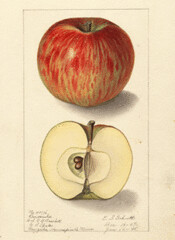
AppleBorovinka


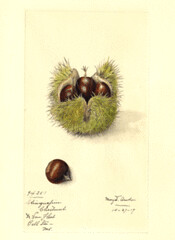
Chinquapin

Recent Cultivar Releases
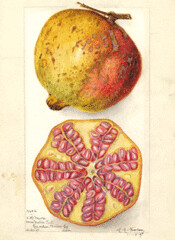
Pomegranate

Current Work in Pomology

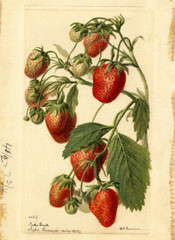
StrawbParkerEarle


QuinceBourgeat


Atom Feed

Powered by Blogger

Add to Technorati Favorites

March 7, 2010

Attack of the Mutant Cherries

Okay, they're not really attacking. But they are mutant cherries.

I've been neglecting my friends over at the Agricultural Biodiversity Weblog, but popping over there to catch up quickly turned up a fruit link:

Japanese Scientists Create Cherry Tree That Blossoms All Year Round (Telegraph)

These sort of "everbearing" mutations have proven useful in a variety of of other crops, including strawberries (which are near and dear to me), but this may be the only one I know of that was artificially induced, rather than naturally occurring. (That said I'm skeptical about the prospects for this variety--the natural cycle of a plant is a critical component of its adaptation, and throwing one element of it completely out of whack like this can have serious detrimental effects. That can be okay in something like strawberry, where you're going to replant it yearly, but on a tree, the results can be a problem.)

Mutation breeding has a long history, though, and in fact one of the more important examples in fruit was also in cherry: the development of self-fertile varieties.

Labels: , ,

September 13, 2009

The Almond Doctor

I'm always pleased when I stumble across single-crop blogs. This morning's discovery is The Almond Doctor, by University of California Cooperative Extension Farm Advisor for Merced County, David Doll. Apparently there are 102,000 acres of almonds in Merced County, which is absolutely mindboggling! The focus seems to be primarily on pest and diseases, which gives it a very practical bent.

The Almond Doctor

Labels: , ,

August 23, 2009

Another pluot link...

Just a quickie here...wanted to link to a pluot post by my friends over at the Agricultural Biodiversity Weblog:

What I did on my holidays: The Pluot (Agricultural Biodiversity Weblog)

Labels: ,

August 22, 2009

Plumcots vs. Pluots

Chip Brantley, whose pluot book I recently reviewed, has also recently penned an article on the distinction (or lack there of) between plumcots and pluots.

The Whole Truth About Pluots Versus Plumcots (Slate)

As I have mentioned before, I myself definitely favor "plumcot". I'm bothered by the idea of something trademarked becoming a generic term for something for which there is no real non-trademarked term, which would be the case if one insisted that plumcots are solely 50-50 plum-apricot hybrids (well, I suppose there's always "interspecific plum", but come on...). It restricts discussion and trade by people who don't hold the trademark, and it dilutes the trademark, so pretty much no one wins.

On a semi-related note, does anybody know the exact species make up of the "cherums" I've been seeing in the store? They've only come in big packages, so I haven't yet bought one, but they look pretty heavy on the plum side of things. I'd be stunned if some one could get any fertility of consequence in a cherry x plum hybrid without a bunch of backcrosses to one side or the other, but I'd be curious just which species they're working with. I'd wondered if maybe it was really a hybrid with the cherry-plum, Prunus cerasifera, but if you believe what little I've found online, it sounds like it involves actual cherries...

Labels: , , , , , ,

Smoothie Quest

As much as I like to occasionally gripe about the selection of fruit in grocery stores, I have to say the number of interesting fruits in them has certainly improved in the last decade. My three year-old and I decided at dinner we were going to make smoothies tonight. We already had blueberries at home, and I had half a flat of strawberries from work in the car (I was planning an informal tasting of the five leading selections, which was cut short when one of my daughters wolfed down one clamshell's worth in a matter of seconds). So we headed to the store and went fruit shopping.

She made her old dad proud, choosing a really eclectic mix of fruits, each of which I sampled before dropping them into the mix:

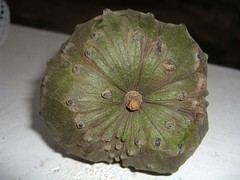
Cherimoya:
Cherimoya Cherimoya


Wow...I'd forgotten how much I liked cherimoya. The aroma is wonderful. And it worked really well in a smoothie. The only downside was digging out all those seeds (which are hopefully working on germinating right now...)

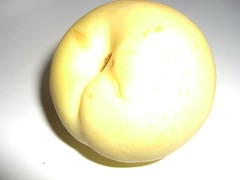
Honeydew Nectarine:
Honeydew nectarine


I had never heard of this before...and I really wasn't missing much. It tasted like a blend of really bland nectarine and underripe melon. It might not have been fully ripe, but the texture suggests it was close. Still, a pale yellow nectarine is interesting. (My picture is kind of washed out...oh well.

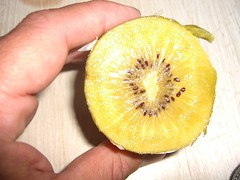
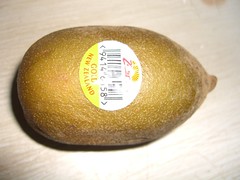
Golden Kiwi:
Gold Kiwi Gold Kiwi


I've been seeing these for a while, but this is actually the first time I've bought one. Interesting that the shape and skin are so distinctive--if I had to guess, this is Actinidia chinensis, not the usual Actinidia deliciosa. It was pretty good, but nothing spectacular. It was a tad past its peak, I think, but it went into the mix just fine.

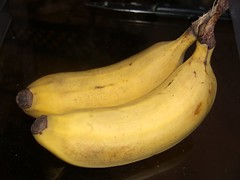
Manzano Bananas:
Manzano Bananas


I really like these things. I probably should have waited for them to darken more (it does improve the flavor), but they're really good even at this stage. I ate one while I worked and gave the other to my daughter, so none made it in the smoothie (we bought some standard bananas too, which served just fine).

We also got blackberries (which my daughter had nearly reduced to smoothies already by the time we got them back to the car--she was enjoying shaking the bag vigorously), a nectarine, more standard versions of kiwi and banana, and an apple.

The smoothies were good and we got to discuss lots of different fruit species. How many three year olds do you know who can tell you all about cherimoyas?

(I didn't really have a point to this post, other than just basking in all the fruit I just bought).

Labels: , , , , , , ,

August 16, 2009

The Perfect Fruit: Good Breeding, Bad Seeds, and the Hunt for the Elusive Pluot, by Chip Brantley


The Perfect Fruit:
Good Breeding, Bad Seeds, and the Hunt for the Elusive Pluot
Chip Brantley

240 pages
Bloomsbury USA, 2009
List $25


What seems like an eternity ago, when I was still posting semi-regularly here, Chip Brantley contacted me about doing a series of fruit breeder profiles for his website, CookThink. Then a few personal crises intervened on my side, things got postponed, work picked up, and it never happened. But in the course of our conversation he mentioned that he was writing a book on pluots. I thought this was a pretty cool idea--there aren't many decent books on stone fruit, and certainly not on pluots specifically, and I said I'd like to read it when it was done.

That was probably a year ago. I'd honestly kind of forgotten about it. When you talk to serious fruit enthusiasts, you'll find that an awful lot of them are writing books about fruit. I think it comes from reading too many books about fruit. (For the record, in keeping with my obligation is a fruit fanatic, I'm writing a book, on grape breeders, or at least I was until my hard drive crash ate about half of it. I have to say my enthusiasm has waned a bit since). But anyway, I didn't necessarily expect that I would ever see the pluot book.

But I have to give Chip credit: not only did he write the pluot book, but he remembered my interest in it, and a couple weeks ago a copy appeared in my mail box.

I haven't been so pleased with a fruit book in a long time. It's not because it's the perfect book on pluots. I'd have written a very different book on pluots: more species info, more chromosomes, more history, more Luther Burbank. My book would have been twice as long, and it would have had lots of photos and tables, and probably nobody but me and a handful of stone fruit breeders would have been able to stomach reading it from cover to cover.

Brantley didn't write that, book, and I'm glad he didn't. Because this book does something else that no other book I've read has really done, at least not as well, and that is to capture what it's like on the inside of the fruit industry. The pluot is important to this story mostly because it's the central theme, but it in a very real sense, it's not what the book's about. The book is about the people and the business that have grown up around stone fruits--the breeders, the growers, the shippers, even the grocery stores. But one could have written the same story about strawberries, or apples, or citrus.

When people ask me what I do for a living, the next question (if there is a next question--I get a lot of blank stares of incomprehension) is what it is I do all day. And I dutifully try to explain, which inevitably entails a long complicated explanation of what it is the company does and how I fit in there and then I notice they're either losing interest or have wound up with one of those blank stares after all. This book is that explanation, only readable and interesting. For the people I really want to understand the business I work in, I will be recommending this book.

But even if you don't have a fruit breeder in the family that you're seeking to understand, I think this is still an important book, because so few people really understand the machinery that stands behind the produce they buy at the store. There's a lot of ignorance and a lot of misconceptions about agriculture and about farmers (there's virtually no misconceptions about fruit breeders, because hardly anybody knows we exist, though we do occasionally get accused of genetic engineering).There is a lot more complexity to the stone fruit industry than probably occurred to most folks, which is probably really the case with most industries. And as we follow both the development of the pluot and the players on the stone fruit stage, of the shifting loyalties and million dollar gambles, we start to get a picture of the constant balancing act these growers need to perform.

I've had so many conversations with people in which the grower is cast as some evil profiteer who cares nothing about quality, gleefully foisting crappy tasting fruit onto the hapless customers and cashing his fat checks. Many people don't seem to realize that the vast majority of growers want to grow good fruit. They want a product they can be proud of, that they can feel good putting their family name on. Unfortunately, many are working within the bounds of a system that doesn't put much value on quality, where price is dictated by volume and convenience. It's also a system in which margins are often slim, and the grower who chooses to emphasize quality but doesn't find a way to get paid for it sometimes can't pay his bills at the end of the season. (And sometimes it doesn't matter what they do--some seasons no one makes money).

Stone fruit have suffered a great deal in the current system, though perhaps not uniquely so. I didn't think I liked fresh peaches until I was 28 and in grad school in Arkansas, and I actually tasted tree-ripe peaches. A good peach is just about as good as fruit can get. Same goes for plums. I haven't had a plum I truly liked from a grocery store yet, nor even from a farmer's market, but I've had plenty of good ones out of people's back yards. Mass producing food is inevitably a compromise, but the stone fruit seem to have been more compromised than most.

The book ends on a hopeful note, that maybe this system is starting to change, and the pluot is held up as an example of how things are shifting. And I hope he's right. Certainly store-bought pluots have raised the bar for stone fruit. But I'm still continually disheartened by how many people just don't notice. People who will happily munch on the nine-month-old 'Delicious' apple and not notice the distinct resemblance to damp cardboard, or buy boxes full of half-green strawberries. I think somehow some of these people just like the concept of eating fruit in some way completely detached from the actual experience of doing it. These are the people who have set the tone for a long time. We have crappy produce in our stores solely because people like this will happily pay a reasonable price for them. If the only fruit people paid money for was good fruit, then there would only be good fruit in the stores, and growers would be paid to produce good fruit. That's how capitalism works.

As I have said, it's not as technically or historically focused as many single fruit books are, which was initially a bit of a disappointment to me. (It's worth noting that the Washington Post's review, while positive, thinks he gets too caught up in "long tedious fruit genealogies", so much of this is probably in the eye of the beholder). There's not a ton of science, beyond a basic explanation of how breeding is done and a brief overview of Prunus. Nor does Luther Burbank, father of the plumcot and probably the greatest plant breeder ever, get his fair share, in my view. Instead the star of this story is Floyd Zaiger, probably the closest thing to Burbank alive today, who took Burbank's idea and turned it into commercially viable varieties. I've wanted to write a piece about Zaiger Genetics for ages, but for now you'll just have to settle for this article or the Dave Wilson's Nursery catalog of Zaiger varieties, always an entertaining read in itself.

Brantley's writing is engaging, occasionally humorous, and infused with passion for his subject. His excitement about pluots has that slightly unfathomable quality that I find all good fruit authors have. In the narrative of his pluot research, I can see shadows of my own journeys of discovery into various fruit. Not everyone will get that, I suspect. But I also suspect most people, even those with no particular interest in pluots, will be taken by the string of characters Brantley visits in the course of his quest. The book is a quick, easy, and rewarding read, and I heartily recommend it to any one who eats fruit (which I would assume is essentially any one reading this blog).

You can buy it from Amazon and Barnes and Noble, among other places.

Labels: , , , ,

August 31, 2008

Candy Cots?

I try hard not to miss linking to any articles by David Karp (The Fruit Detective), but I let this one slip by a while ago:

Sweet Rewards for Apricot Explorers (New York Times)

I would love to see some more apricot options out there. I have had good apricots, but most of them were a long time ago, and unlike many stone fruits, moving some place where they can be grown and buying them from the farmer's market hasn't really helped. Okay, it's helped some, but even 'Blenheim', which I'd heard good things about for years, has repeatedly proven rather unsatisfactory. Virtually all apricots I've tasted recently have been unimpressive. The very best of the Blenheims I've had were sweet, with a touch of tartness, but no distinct flavor beyond that, and no real aroma, either. My two-year-old was sufficiently unimpressed that she decided to chew on a lemon instead (although to be fair, she was upset with the results of that, as well).

It's interesting to me that it's taken this long for such supersweet apricots to be introduced to this country if they've been known for a while. Doesn't it seem like anything extremely sweet has pretty obvious commercial potential? Of course it wasn't that long ago these were locked behind an iron curtain, and the Central Asian republics hadn't been at the forefront of anyone's mind in a while, with the exception of a few botanists and oil and gas tycoons (and maybe Borat fans). I have to say I really don't like the name "Candy Cot"--fruit names really shouldn't be cutesy, in my opinion. This sounds like something a marketing department would come up with, not a fruit breeder. But to each his own, I guess. (And really, "candy" can't be too far off at 26 degrees Brix).

Apricots can be kind of tricky in their climate requirements: they tend to have a fairly high chilling requirement (frequently 700-1200 hours, though Blenheim and a few others are a bit lower--more like 400-500), which excludes them from many warm climate regions, but they also have a tendency to get clobbered by changes in winter temperature, and, most critically, the habit of early flowering means that late frosts can wipe out crops in many of the areas with enough chilling to grow them.

I did see a pair of very low chill hybrid apricots at the University of Florida. These are crosses with a selection of Prunus mume from Thailand. Prunus mume is also known as Japanese apricot (or just 'mume' or 'ume') and although lower chill than the standard apricot (Prunus armeniaca) is generally kind of borderline in as far as chill in Florida itself. I asked Wayne Sherman, the retired stone fruit breeder from U.F., about the hybrids, and he seemed a little non-committal about their prospects--probably not a promising sign, given his almost universal enthusiasm for every other tree I asked him about there.

There are a few other armeniaca x mume hybrids out there, though none of the others are to my knowledge the product of intentional crosses. These include 'Shirokaga' and 'Bungo' (a name which has always amused me). I have no idea what chilling requirements are on these, but an Australian study found 'Bungo' poorly adapted for subtropical conditions.

Labels: , , , ,

July 17, 2008

Golden Cherries

According to this article, the very first white cherries are due to arrive on supermarket shelves in the U.K.:

Farm's rare cherries to hit supermarket shelves (KentNews.co.uk)

Could this really be the first time in the U.K.? I haven't done enough cherry shopping there to know, but I see 'Rainier' white cherries in supermarkets in the U.S. with some regularity, and white cherries are hardly a new development: Thomas Jefferson and George Washington planted 'White Heart' cherries, and the 'Yellow Spanish' (possibly the same thing?) dates at least to the first century. The variety in this case is 'Merton Glory', which the story itself notes is easily 40 years old.

Also, granted, the incredibly weak dollar warps things a bit, but the £3.95 per 400 g is roughly eight times what I paid for 'Rainier' cherries at a local produce market a few weeks ago. Now I have to admit that I've never had 'Merton Glory', but I'm going to bet it's not eight times better than 'Rainier' (though Rainier is not always the best cherry out there, it's generally fairly decent).
Blogged with the Flock Browser

Labels: ,

May 28, 2008

Beach Plums

It says a little bit about how fruit-centric my mindset is that I think of Richard Uva as "The Beach Plum Guy", rather as "Weeds of the Northeast Guy", considering that that book, which from what I've heard was a M.S. thesis project, is one of the very best weed guides for the region, a major scientific accomplishment, and, realistically, probably a much larger contribution to horticulture than anything involving beach plums will ever be.

I had a poster near Mr. Uva at an ASHS meeting once long ago--in fact that's how I learned there was such a thing as a beach plum, having managed to miss it entirely in several trips to Cape Cod.

Anyway, here's a link to a fairly good size overview on beach plums from Mr. Beach Plum himself:

Taming the Wild Beach Plum (Arnoldia reprint, via Cornell) PDF

Update: Oops...I mean Dr. Beach Plum. Looks like he acquired a Ph.D. since I met him. (Congratulations, Richard!)

Labels: ,

May 26, 2008

The Devil's Apple

Maybe just because it's May and I'm eating an apple, I've been thinking about mayapples (Podophyllum peltatum) tonight.

When I was a kid, there was a big patch of mayapples on my grandparents' property, right at a bend in the path that led down through the woods to the creek. I was always fascinated by the plants, with their odd single leaf, and their very rare flowers and fruit. I'm not sure any one ever told me that it was edible--I think I just extrapolated that from the word "apple" in the name. I don't think I ate too many of them, because I hardly ever found the fruit--I think the birds or squirrels or woodchucks or raccoons beat me to them most of the time. Turns out the plants are poisonous, as are the fruits if they're not ripe, so I'm probably lucky I didn't do myself in, sampling from them at random. Some people even have dangerous reactions to even touching the plants.

But when ripe, the fruits are edible, and they're actually pretty decent, with a kind of lemon/banana-type of flavor, and people make them into pies and preserves. Knowing what I do now, I'm not sure I'd actually eat such a pie anymore. (And I'm not sure you should either. Consider this a disclaimer--the Fruit Blog does not endorse you eating mayapples or any other potentially poisonous fruit.)

I guess mayapples probably belong to the same class of fruits as bitter almonds: things that are at least kind of safe in small quantities, but probably not good enough for any sane person to consider the risk worth dealing with in any significant quantity.

Anyhow, here's a page with a bunch of mayapple pictures.

Labels: , , , ,

May 25, 2008

Vayro, Marinada, Constantí, and Tarraco Almonds

Four new late-blooming almond cultivars from Spain:

Vayro, Marinada, Constantí, and Tarraco Almonds (HortScience reprint, via IRTA)

Labels: , , , ,

May 5, 2007

A short blurb on Dennis Werner...

This isn't an incredibly in depth article, but I'm always pleased to be supportive on those rare moments wwhen the mainstream press recognizes the work of fruit breeders. My exposure to Werner has been more in his role as an ornamental breeder, but there's no question that he's made considerable contributions to peach breeding as well, and he seems like a genuinely nice guy.

Professor's Work Is Just Peachy (News & Observer, Raleigh)

Labels: , ,

January 11, 2007

This is kind of cool...

A pit detector for dried plums:

Invention Detects Hidden Dried Plum Pits (via ScienceDaily)

Labels: , , ,

November 6, 2006

Harold W. Fogle, 1918-2006

Harold Fogle, Wilder Medal winner and breeder of the 'Rainier' sweet cherry as well as a number of other fruits with Washington State and the USDA, has died.

Fruit Scientist Harold W. Fogle Deceased (via FreshPlaza)

Labels: , , ,

October 11, 2006

Attack of the Almond Pirates

I heard this on NPR the other day on the way home from work...how I managed to avoid posting it this long I don't know.

Seems that some one has been stealing almonds from California's growers. And we're not just talking climbing over the fence and filling their pockets. We're talking truckloads. Eleven tractor-trailer loads this year, in one case 80,000 pounds of almonds in a single go. Almost $2 million worth so far. They're assumed to be selling them on the black market, because it's not like you can just hide nearly a million pound of almonds in your garage and sell baggies on street corners...

California's Almond Farmers Cope with Thefts via NPR (audio segment)

Update: Here's a link to a good old fashioned text version of the story, for those who can't be bothered with things like sound: Thieves Reap What Almond Farmers Sow, via The Modesto Bee.

Update 2: And, for completeness sake, a video version for those of you who want the full multimedia experience: Nut Nappers Creating Problems In Stockton (looks like they've moved onto walnuts, too!).

Labels: , , ,

New Peach from Italy, 'Ghiaccio'

I have to confess that I don't keep quite as up on what's hot and new in the Prunus world, so this may have been out a little while, but I noticed a link to this article on a new peach cultivar, 'Ghiaccio', and I was absolutely struck. That's just about the whitest peach I've ever seen. I have no idea how the thing tastes, but that's a pretty cool-looking peach. (They also mention a flat nectarine in the article, which I've never seen before, although I suppose it'd be easy enough to breed, as both flatness and nectarine-ness (?) are single gene traits). Any one know when we can expect to see this in the U.S.?

I also think it's interesting and a bit odd that this is really three cultivars, Ghiaccio-1, Ghiaccio-2, and Ghiaccio-3. What's the story behind that? It's hard to tell from the article. They appear to be differentiating by ripening time, and it's a major difference--over a month between #1 and #3! Are these clonal variations, or did they just choose three very similar siblings and release them under the same name (I suspect this is the case)? If it really is a matter of clonal variation, a mutation that results in a month's difference in ripening date may have interesting breeding implications down the road sometime!

Anyway, I don't have any thing official, but I'll put 'Ghiaccio' over in the new cultivars list on the side. At some point I'll have to start taking things off, before it takes over the whole sidebar...

Labels: , , ,

October 8, 2006

Canadian Plums

Well, if you missed the Fruit Festival in Edmonton (I did), you can at least satisfy your need for information on Canadian fruit with this little article on growing plums and Canadian plum cultivars:

Just Plummy (Edmonton Journal)

It's a conversation with a couple of experienced plum growers. There really is a remarkably varied range of genetic material out there when it comes to plums, lots and lots of very different species, cultivars, etc. Probably something that'll grow almost anywhere.

Labels: ,

July 20, 2006

Alternative Fruit Crops Field Day

Now I realize most of you aren't anywhere remotely near this (I'm not) but I just came across this and thought I would share the info. Apparently on August 3th there's an Alternative Fruit Crops Field Day at the Fruit Experiment Station of Southwest Missouri State University (I've heard they're just Missouri State now? Anyone know if this is the case? I think the URL is changed, too...). They'll be talking pawpaws, elderberries, persimmons, and assorted odd Prunus, and if you happen to live nearby, this is a good opportunity to learn more about these things.

PDF of the flier

Labels: , , , , , , ,

June 16, 2006

Fruit Genetics Friday #3: Self-Incompatibility

When shopping for fruit and nut trees (or just flipping idly through nursery catalogs), one common issue is that many species require another of their species to provide pollen in order to set fruit. Most fruit crops produce flowers which are both male and female, and produce plenty of pollen. In some cases odd ploidy can result in plants incapable of producing viable pollen at all (or very small amounts, anyway), and a few species are dioecious (having male and female flowers on separate plants). But in many cases, the plants in question produce perfectly good pollen. Nursery catalogs are full of little pollination tables and warnings of "requires a pollinator" or, strangely enough, something along the lines of "[Cultivar X] will not pollinate [Cultivar Y]".

The reason for this is a phenomenon called self-incompatibility (SI). As inconvenient as it is for those of us who would like to just plant our favorite cultivar and nothing else, self-incompatibility serves a useful purpose evolutionarily. The whole point of sexual reproduction is to encourage assortment and exchange of genes, and yet by generally self-fertilizing (which they do by having male and female reproductive organs mature simultaneously and adjacent to each other), many species have sacrificed this evolutionary opportunity in exchange for a better chance of producing offspring, with the downside that those offspring will be merely reassortments of the parent's genes, not new mixtures of two individuals. Self-incompatibility evolved to prevent self-pollination in such cases, helping to avoid inbreeding depression.

There are two major SI systems in fruit crops, and both are really quite simple, though the implications are not necessarily so. Both involve interactions involve alleles of a single gene, called the "S" locus, which is why the basic genetics of it were worked out nearly a hundred years ago.

Gametophytic self-incompatibility, the most common form, is most commonly seen in sweet cherry (Prunus avium, which, coincidentally, I'm eating a giant bag of right now), though it's also found in a number of other fruit and nut species including almond, Japanese apricot, roses, arctic bramble and assorted diploid blackberries and raspberries. Under this scheme, the haploid genotype of the pollen is the factor determining whether pollination can occur. Each pollen grain receives one of the two S-alleles of the parent, and that pollen is unable to germinate on flowers of individuals which possess the same S-allele. So, for example:

If you have a cherry tree with the S-genotype of S1S2, the pollen grains produced will be either S1 or S2. Neither can fertilize the tree's own flowers, since both S1 and S2 are present in the female. But say a neighoring tree is S1S3. It can produce S1 and S3 pollen. The S1 grains won't be able to germinate on either tree's flowers, but the S2 grains of the first tree can fertilize the second, and the second's S3 grains can fertilize the first. If we propose third tree, S4S8, appears on the scene, then both the other plants, having neither S4 or S8, will be able to fertilize it, as well as the reverse. There are quite a few different S-alleles in cherry, so the odds of getting two cultivars with the exact same complement is pretty small, but it can happen (for example, 'Bing' and 'Emperor Francis' are both S3S4). A nice diagram of gametophytic SI is available here.

The other system is called sporophytic incompatibility. This one's a bit less common, particularly in fruit. The example that springs to mind is hazelnut (Corylus species). The situation is similar to the gametophytic system, in that it depends on a pair of S-alleles. But there is one critical difference: in gametophytic SI, the compatibility phenotype of the pollen grain depends on the genotype of that grain, while under sporophytic it is the genotype of the parent that matters. So while a S1S2 GSI plant produces pollen grains with S1 or S2 genotypes, and corresponding S1 or S2 compatibility phenotypes. However, under SSI, while pollen grains are still genotypically S1 or S2, they all will share the dominant S-alleles phenotype (in this case S1). So a S1S2 SSI plant would produce pollen grains carrying the S2 allele, but effectively S1 for pollination purposes, so it could pollinate a S2S3 plant. An interesting twist is that while GSI plants are always heterozygous (with one minor exception which I will get to), SSI plants can carry two identical S-alleles, because it the actual genotype of the pollen is not related to the phenotype. It also adds the extra complication of the needing to know the dominance hierarchy of the S-alleles (which, inconveniently, is not simply numerical order. It's actually something like: (3, 8), (6), (1, 5, 7, 10, 12, 14, 15, 16, 17, 18, 20, 21, 24), (2, 25), (19), (9, 11, 22, 26), (23), (4), with dominance running from dominant on the left to recessive on the right (alleles in the same set of parentheses are roughly equivalent in dominance).

Researchers have, however, managed to come up with a convenient end-run around GSI in cherry. Scientists pollinated 'Emperor Francis' (S3S4) with irradiated pollen from 'Napoleon' (also S3S4). Normally, with both parents having the same S-alleles, no cross could occur. But a few seeds did set, because the radiation had damaged the chromosomes in some of the pollen grains, and, completely randomly, had damaged the S4 allele carried in one of them. The resulting seedling was JI 2420, which broke the rule I just mentioned above by being S4S4. However, one of those S4's was non-functional, and could pollinate any sweet cherry, including itself. The value of this was obvious, and JI 2420's amazing allele was immediately incorporated into a new cultivar, called 'Stella'. Nearly all self-compatible sweet cherries carry S4', the modified S4 from 'Stella'. While the trait is undeniably useful, the dependence on a single source is worrisome from a genetic diversity standpoint, and Amy Iezzoni, cherry breeder from Michigan State, has suggested that there may be some undesireable linkages associated with Stella's S4' gene. (Another self-compatible selection, JI 2434, came from the same experiment as JI 2420 and has been found to carry a second self-compatibility gene, this one a modification of the S3 allele (cleverly indicated S3'). So there's at least another option out there. Similar self-compatibility alleles exist in almond, Japanese apricot, and probably Rubus, having occurred naturally and been selected.

So next time you see those compatibility tables in the nursery catalog, see if you can puzzle out the S-allele genotypes based on the information given. And don't forget to buy a pollenizer!

Labels: , , , , ,

January 3, 2006

Private Peach Breeding Programs

Most fruit breeding is a costly, time-consuming endeavor, and as such has mostly been the realm of either government researchers or hobbyists working on a small scale. That's why I was surprised to note (in discussions on the NAFEX mailing list), that there are at least two signficant private peach breeding programs in this country, Paul Friday's Flamin' Fury Peaches, and Fruit Acre Farms Stellar Series of peaches. Both are located in Michigan, and both seem to have gotten good reviews from growers and researchers. As strongly as I feel that governments ought to be supporting fruit breeding, the reality is that funding for such things continues to dwindle, and programs like these will be needed to pick up the slack. I hope breeding continues to be a profitable and rewarding enterprise for them both.

Anyway, I'd heard of both series before, but I guess I'd never thought about where they came from. I'm curious to know if there's some connection between them...there's clearly a rivalry there, and if you read a bit you'll notice that the Fruit Acres' breeder, Annette Bjorge, says her father, who started the program, was named James Friday. Seems like a big coincidence, but maybe there are just lots of Fridays running around growing peaches in Michigan?

I'll be back home and back to work tomorrow, and hopefully I can arrange for some interesting posts inspired by the new books. I've been enjoying my new copy of Janick and Moore's Advances in Fruit Breeding while watching TV tonight.

Update: I was sufficiently excited to learn about two private peach breeders I didn't know about that I forgot a couple I did:

Zaiger Genetics. Actually, they do a whole lot more than just peaches. I find all the goofy names they give their various interspecific hybrids a little obnoxious, but it's hard to deny that they've been productive, and that some of the results are pretty good (though to be honest I've only tasted a handful of their many, many releases).

Sun World, who both breed and produce a range of fruit crops, also has developed some peaches. I tend to think of them more in terms of grape breeding, particularly the 'Sugraone' (aka 'Superior Seedless') grape.

Labels: , ,