.comment-link {margin-left:.6em;}

Fruit Blog Header.jpg
APPLES - BRAMBLES - CITRUS - GRAPES - NUTS - PAWPAWS - PEARS - PERSIMMONS - STONE FRUITS - STRAWBERRIES - FORUM

Cherimoya
My cherimoya, shortly before it became smoothie fodder.

Archive of past images


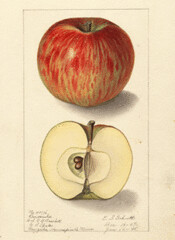
AppleBorovinka


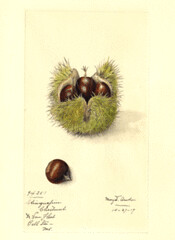
Chinquapin

Recent Cultivar Releases
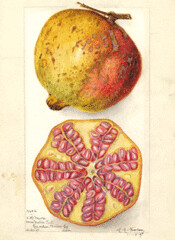
Pomegranate

Current Work in Pomology

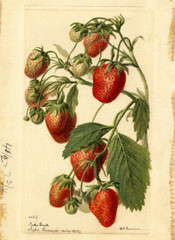
StrawbParkerEarle


QuinceBourgeat


Atom Feed

Powered by Blogger

Add to Technorati Favorites

March 7, 2010

What this strawberry needs is a name that says "dry and sandy"...

The University of California strawberry breeding program (the southern branch, based in Irvine) has released two new strawberry varieties, Benicia (formerly C225) and Mojave (formerly C227).

The southern California strawberry industry is kind of hurting these days, with increasing yields and increasing acreages (as well as competition from Mexico and elsewhere) pushing down prices and cutting into profit, so I'm sure these will be welcomed, though the last release from this program, 'Palomar', has not really caught on.

I've tried these varieties, when they were in limited trials, and I have to say I don't see any of them really setting the world on fire, though. The flavor was definitely better than 'Ventana', which is the current standard, but didn't exactly knock my socks off, and the fact that they're actually talking about how soft 'Mojave' is seems like a bad, bad sign. I'll take anything that pushes the quality standards above 'Ventana', which is an insult to strawberries, but since yields appear to be no higher they're not likely to be much of a fix for what ails the industry.

(And yeah, I've got a certain bias here, but I call 'em like I see 'em)

There's much more info on these in this presentation, but they're not named yet, so just look for the testing numbers (poor C226, so close to a shot at the big time).

Labels: , , ,

February 24, 2010

The Red Prince (or: Just in case you thought I'd died)

Just came across this article on a new(ish) apple variety and thought it was kind of interesting...always happy to see these sort of things appearing in the mainstream press, even if it comes with the obligatory discussion of HoneyCrisp which I'm getting a tad tired of.

The invention of an apple: The Red Prince (National Post)

Sorry to neglect things around here...maybe this will be the start of a resurgence?

Labels: , , ,

February 7, 2009

Bananacasts

The Voice Of America has five podcasts/articles (I have no idea if the articles and the podcasts say the same things, as I haven't made it very far into either at this stage) on bananas:

Banana Mooted As Top Crop In Africa (1 of 5)
Disease Threatens Banana Industry (2 of 5)
Top Trade Lawyer Doubts Feasibility of East African Banana Exports to Europe (3 of 5)
Governments and Global Businesses Urged to Help African Banana Sector (4 of 5)
Sweeping Reforms Needed to Improve African Banana Industry (5 of 5)

I've thought a little bit about doing a fruit breeding podcast, but I'm not convinced it's worth the bother.

Labels: , , ,

November 15, 2008

Rumors of the bananas' death have been greatly exaggerated?

Found this today thanks to the wonder of Google News:

Banana Shortage? Nothing to Worry About (Medicine Hat News)

This of course misunderstands (or maybe just ignores) the biggest threat posed by banana diseases. Pesticides and cultural practices can probably preserve banana production for those of us in developed countries, where a few cents difference in price doesn't even register. But bananas are also a staple crop for millions of people, many of whom are already in a very precarious position. Even a slight decrease in yield could mean going hungry, or it could also mean the elimination of the what little surplus they had to barter or sell to buy other supplies, pay for schooling or medicine, etc.

(Sorry I haven't been around--just been distracted.)

Labels: , ,

August 31, 2008

Candy Cots?

I try hard not to miss linking to any articles by David Karp (The Fruit Detective), but I let this one slip by a while ago:

Sweet Rewards for Apricot Explorers (New York Times)

I would love to see some more apricot options out there. I have had good apricots, but most of them were a long time ago, and unlike many stone fruits, moving some place where they can be grown and buying them from the farmer's market hasn't really helped. Okay, it's helped some, but even 'Blenheim', which I'd heard good things about for years, has repeatedly proven rather unsatisfactory. Virtually all apricots I've tasted recently have been unimpressive. The very best of the Blenheims I've had were sweet, with a touch of tartness, but no distinct flavor beyond that, and no real aroma, either. My two-year-old was sufficiently unimpressed that she decided to chew on a lemon instead (although to be fair, she was upset with the results of that, as well).

It's interesting to me that it's taken this long for such supersweet apricots to be introduced to this country if they've been known for a while. Doesn't it seem like anything extremely sweet has pretty obvious commercial potential? Of course it wasn't that long ago these were locked behind an iron curtain, and the Central Asian republics hadn't been at the forefront of anyone's mind in a while, with the exception of a few botanists and oil and gas tycoons (and maybe Borat fans). I have to say I really don't like the name "Candy Cot"--fruit names really shouldn't be cutesy, in my opinion. This sounds like something a marketing department would come up with, not a fruit breeder. But to each his own, I guess. (And really, "candy" can't be too far off at 26 degrees Brix).

Apricots can be kind of tricky in their climate requirements: they tend to have a fairly high chilling requirement (frequently 700-1200 hours, though Blenheim and a few others are a bit lower--more like 400-500), which excludes them from many warm climate regions, but they also have a tendency to get clobbered by changes in winter temperature, and, most critically, the habit of early flowering means that late frosts can wipe out crops in many of the areas with enough chilling to grow them.

I did see a pair of very low chill hybrid apricots at the University of Florida. These are crosses with a selection of Prunus mume from Thailand. Prunus mume is also known as Japanese apricot (or just 'mume' or 'ume') and although lower chill than the standard apricot (Prunus armeniaca) is generally kind of borderline in as far as chill in Florida itself. I asked Wayne Sherman, the retired stone fruit breeder from U.F., about the hybrids, and he seemed a little non-committal about their prospects--probably not a promising sign, given his almost universal enthusiasm for every other tree I asked him about there.

There are a few other armeniaca x mume hybrids out there, though none of the others are to my knowledge the product of intentional crosses. These include 'Shirokaga' and 'Bungo' (a name which has always amused me). I have no idea what chilling requirements are on these, but an Australian study found 'Bungo' poorly adapted for subtropical conditions.

Labels: , , , ,

August 17, 2008

Traditional Ugandan crops disappearing

I hesitated a bit to post this, but I gave in because I really like the names and descriptions of all the traditional crops, and, whatever the cause, the issue is a serious one.

However I'm a little concerned about what seems a little bit like a misunderstanding of how hybrid seed works. It's common to hear people say "you can't save seed from hybrid varieties". This is true to the extent that these varieties won't come true from seed. However, you CAN get seed from these varieties, and, despite what the story describes, they generally will germinate just fine. The resulting seedlings won't be as uniform as the previous generation, and they probably, as a group, won't be as productive, but you could save seed for generations this way without problems (and in fact, if you did, it would probably eventually homogenize into more of a landrace and become increasingly uniform).

Hybrid varieties are distinct from the so-called "terminator" technology, which actually produced non-viable seeds (and also, despite the hype, was never actually implemented commercially). In theory I suppose it would be possible to find two inbred lines which when combined yield an F1 plant incapable of producing viable seeds, but it seems pretty unlikely, since genes encouraging sterility would hopefully be bred out of the breeding program.

There is a disturbing trend to characterize modern varieties as inherently pest-prone, fertilizer-intensive, and worse-tasting. They can be all those things, but so can traditional varieties. You get what you select for. I get really sick of the tendency to talk about plant breeding as a process which makes crops into finicky, crappy tasting garbage in exchange for yield. You absolutely can create varieties which taste as good (or better) than traditional varieties, produce more, and resist pests. In fact, plant breeding is the only way to get to that.

With those caveats, enjoy the akatunda akaganda, ebigaaga and obuyindiyindi:

Disappearing delicacies (Monitor Online)

Blogged with the Flock Browser

Labels: , , ,

August 5, 2008

Urban pomology takes root

I don't think many people really appreciate how much in the way of fruit you can fit in a small backyard or even a patio or rooftop. I'm guilty of it too...I spend a fair amount of time bemoaning not having room for vast orchards or vineyards, and fantasizing about owning acres. But the fact is, a relatively small yard can provided a phenomenal amount of fruit for a few people, and even if you don't have a yard, you can do remarkably well with pots, provided you have some sun and a place to park them (some things will even do well indoors with a sunny window, including pomegranate, figs, and some citrus, although they are rarely as productive as they would be outdoors). In our old house, I had dozens of strawberry varieties (including a few small seedling populations), some blackberries, a Chinotto orange, and an incredibly productive lemon tree, all in pots on either the patio or the front sidewalk.

Backyards, Beware: An Orchard Wants Your Spot (New York Times)
Blogged with the Flock Browser

Labels: ,

July 21, 2008

Asian citrus psyllid is knocking on California's door

And where they psyllid goes, so goes the huanglongbing:

Disease-carrying insect poses threat to citrus (San Diego Union-Tribune)

I'm going to be pretty bitter if California winds up with every citrus disease known to man when I had to leave my awesome potted mystery lemon behind to move here. (I did get a tangerine with the new house as a consolation prize, and some day, if they ever get around to ripening, I'll have 'Moro' blood oranges, too.)

Labels: , , ,

July 19, 2008

Scottish Raspberries in China

Here's a bit of news that kind of surprised me:

Chinese deal is berry good news for Scottish raspberry growers (The Scotsman)

First of all (this isn't the surprising part), let me just say that you don't have to be in the berry business (or the fruit blogging business) very long to get really sick of all the "berry"="very" puns. It's not that clever--give it a rest.

Secondly, note the one small line in here:

"While there is currently no plant royalties legislation relating to raspberries in China, Kerby reckoned a good deal has been struck."


China is basically the world capital of intellectual property theft, has no mechanisms of or, as far as anyone can tell, real interest in, enforcement of patent law. Enforcing plant patent law is tough in the best of cases (note that SCRI seems to be satisfied with 75% success in the Spanish case mentioned in the article, and that is in an EU country with rigorous laws). SCRI has, in my mind, essentially given their raspberry varieties to the Chinese people, and probably to much of the entire world. I have spoken to fruit breeders who have gone to China and seen whole vast fields of what they recongized as their varieties, but were being distributed under other names and claimed as Chinese-developed varieties. They've got a billion and a half people and a gigantic and arcane legal bureaucracy--does any one really think they're going to keep any kind of handle on that? One breeder I know, when asked how to protect one's varieties in China, responded with "By making sure they never, ever enter that country".

I'm not sure the headline even makes sense. Good news for Scottish raspberry growers? How so? Because SCRI is presumably making money on this which will support further breeding for Scotland? I hope it's quite a lot. Otherwise this is just competition for Scottish exports in China, and, probably elsewhere in the world, once these escape the flimsy legal bounds of the deal that's been struck and are being propagated freely.

I don't know, maybe I'm just a cynic.

Update: Just to be clear, this isn't intended as a criticism of the Chinese people or Chinese breeding. There really is not a cultural understanding of the idea of plant patents (hell, we barely have one in the U.S.) and it's not even really illegal (or at least wasn't last I checked a few years back) so it's not like it's a nation of criminals. China does have many fine plant breeding programs and breeders, so I'm not intending to imply that all they do is steal and re-name varieties. But it does happen.

Labels: , , , ,

July 18, 2008

June 2008 Fruit Patent Round-up

Here's an idea I had a while back--maybe it's painfully dull to some of you, but it's the sort of list I love clicking through. Here are the fruit cultivar patent applications published by U.S. Patent and Trademark Office last month:

APPLES:
'Emmons' - A chance seedling, probably of 'Golden Delicious' and (Red) 'Delicious'
'Galaval' - A whole-tree mutation of 'Galaxy' (a sport of 'Gala'), notable for its intense dark purple-brown color (This is desirable why, exactly?)
'McLaughlin Gala' - A limb mutation of 'Kidds D-8' (a sport of 'Gala'), with yellow skin and early ripening
'B. Thorne McIntosh' - A limb mutation of 'Starling' (a sport of 'McIntosh') which begins color 80 days (!) before the original.

CHERRIES:
'Rosie Ranier' - Interestingly, not a derivative of 'Ranier', but probably similar in appearance: a blush yellow cherry from a cross of 'Bing' x 'Earlisweet'

KIWIS:
'Hongyang' - A partially red-fleshed kiwi from seed of Actinidia chinensis var. rufopulpa, from China.

FIGS:
'Sequoia' - A large, green, fresh market fig from the cross 'Tena' x D3-1.

STRAWBERRIES:
'PS-5298' - A proprietary late season strawberry cultivar for the northern growing district of California.
'PS-5096' - Another proprietary late season strawberry cultivar for the northern growing district of California.

PLUMS:
'Vibehue99-1' - A chance sport of 'Angelino', with very dark skin, good flavor, and shipping quality.
'Suplumthirtyeight' - A very early Japanese plum variety from a cross of 92P037-130-001 x 'Suplumtwenty' (Got to love those SunWorld names...)

NECTARINE:
'August Lion III' - A large, late, yellow clingstone nectarine

GRAPEVINE:
'Sheegene-1' - A large, dark red, seedless table grape, from the cross 'Red Globe' x 'Princess'
'Sheegene-3' - A large, red, seedless table grape, from the cross 'Red Globe' x 'Princess'
'Sheegene-4' - A large, green, nearly seedless table grape, from the cross 'Red Globe' x 'Autumn Seedless'

LEMON:
'Eureka Seedless' - Seedless limb sport of 'Eureka'


Blogged with the Flock Browser

Labels: , , ,

July 9, 2008

Certified Marionberries

Looks like growers in Oregon have started a certification program to guarantee that what gets labeled 'Marionberry' really is:

Agency to Certify Oregon Marionberries (Seattle Times)

I find this kind of amusing, and not because of the idea of certifying something as a specific cultivar, which I actually like the idea of, though I'm not sure how many people care (I see mislabeled varieties of fruit for sale, the most common I think being Packham's Triumph pears labeled as Bartlett, which I see almost every year. I finally saw them under their own name this year at Nob Hill). No, I find this amusing for two reasons:

1) I find the name Marionberry amusing mostly simply because it remains me of the scandal-plagued ex-mayor of Washington, D.C., Marion Barry. Call me easily entertained, I guess. (Lady Evil Fruit, when I told her about this story, said "So how can the inspectors tell? Do they look for the crack pipe?) (There's also a Marion Berry who is a U.S. Congressman from Arkansas. I found his name amusing, too, but honestly hadn't thought of him since I lived there).

2) The fixation on Marionberries is simply painting growers into a corner. Marionberry is simply a cultivar of blackberries. A very tasty cultivar of blackberries, admittedly. But it's low yielding and kind of a pain to grow, and so to capitalize on the incredible taste, growers have pushed the idea of it as something distinct from blackberries. Which was all well and good, but ongoing breeding work either has or no doubt will (depending on who you ask) produce cultivars with similarly incredible flavor but without many of the downsides. However, people have tied themselves so thoroughly to the Marionberry name, they can't adopt the new varieties without damaging their brand. And now they're setting up a structure that will make it that much harder.

Labels: , , ,

July 6, 2008

Two quick things, courtesy of the New York Times

The first is this article on foraging for wild fruits. Some of the best fruit in the world isn't cultivated at all, and frankly, some things that I'd be utterly unimpressed with if I tasted them on farm somehow taste far better when you find them in the wild. (Just make sure you know what you're eating...)

In the Garden—Foraging for Berries, the Special on Nature's Produce Aisle

(New York Times)

The second is the fact that there is a New York Times "Fruit" RSS feed. (There probably is for every conceivable keyword, but I just discovered this just now). See it here.

(In other news, I'm trying out the new Flock web browser, which provides some integrated blogging and social networking tools. That's where the cool image came from next to the link--I'm way too lazy to do that on my own. I'm going to play around with it for a few days. Hopefully it doesn't disrupt things too much. Let me know if you think my posts have somehow become weird and unreadable because of it.)
Blogged with the Flock Browser

Labels: ,

July 5, 2008

It actually worked!

I could have sworn I posted when this date seed was planted, but I can't seem to find it to link to, so maybe I imagined it. Anyway, bottom line, some archaeologists found a 2,000 year old date palm seed at Masada, in Israel, planted it, and unbelievably, a couple years later, it's growing and doing fine:

Researchers Resurrect Extinct Judean Date Palm Tree from 2,000 Year Old Seed (AAAS)

The Judean date palm (a variety of Phoenix dactylifera), of which this "Methuselah" is perhaps the last remaining vestige, was once a staple crop of ancient Palestine, at one point existing in vast, towering forests along the Jordan River valley. Date palm culture declined after the arrival of Roman occupation (the Romans had a lot to do with this by preventing the Jews from propagating it), and the Judean date palm appears to have been wiped out entirely by about the sixth century A.D. Modern date palms, still a major industry in Israel, are from imported stock.

Delving into the highly reliable realm of information gathered from anonymous somebodies on internet forums that blogs so often deal in, I also found this post on PalmTalk, which references a genetic study suggesting that the plant bears little resemblance to modern palms, with only a 13% similarity to an ancient Egyptian cultivar (search for "13% similarity" or go maybe a third of the way down the page to a post by 'rubyz'). Another incredibly reliable source, Wikipedia, states that the Egyptian cultivar is Hayany, and that it is a 13% dissimilarity. Who knows. Probably it's at least kind of related to something. Still, whatever its DNA says, it's still pretty cool.

Labels: , , ,

May 31, 2008

That's got to be one big tree...

300 varieties of mango grow on one tree in Mahlihabad (DailyIndia.com)

These all-in-one multi-graft trees never turn out to be as cool as you might expect. Of course, 300 varieties on one tree would be so cool, that you could still be considerably less cool and still be mighty awesome.

Labels: , , ,

May 25, 2008

Vayro, Marinada, ConstantĂ­, and Tarraco Almonds

Four new late-blooming almond cultivars from Spain:

Vayro, Marinada, ConstantĂ­, and Tarraco Almonds (HortScience reprint, via IRTA)

Labels: , , , ,

May 4, 2008

Meet the Mangosteen

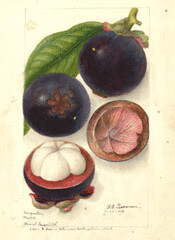
A representative from Frieda's, a California specialty produce dealer, sent me this link to a recent New York Times video article on mangosteens (actually sort of on imported produce in general). It features ethnobotanist Nat Bletter, who might even be a bigger fruit dork than I am. (And Nat, if you read this, I mean that in the nicest way. Honest.) I have to admit, my first reaction when I heard the idea of a "life list" of fruit was to immediately pop open Word and get to work putting mine together. (For the record, it's now moved over into Excel, where I can sort it more easily, though it's very much a work in progress...).

Although I ignore a lot of the messages I get here "informing" me of products I might like to mention on the blog, Frieda's has an interesting enough website that's worth checking out just to poke around, even if you don't buy anything. And, as expensive as they are, I have to admit I'm tempted by the mangosteens. So I'll give them a little free press. (Though for future reference, Ms. Kelly, I do generally respond very well to freebies. We have a very flexible definition of journalistic integrity around here).

My previous post on mangosteens is here, though I noticed that I had tagged it "magonsteens", so it might have been difficult to find. It features a photo by my friend David Karp, whose photos are featured in the NY Times pieces above, and who is comfortably in the same class of fruit dork as Nat and I.

Labels: , ,

April 30, 2008

'Western Dawn': A New Apple From Australia

Here's a new variety from Western Australia, from a cross of Lady Williams x Gold Delicious:

New WA apple doesn't go brown (The West Australian)

Although it's named 'Western Dawn', in the grand recent tradition of double-naming varieties, it's going to be marketed as 'Enchanted'. Apparently it's browning (oxidation) resistant.

Labels: , , ,

April 28, 2008

Bananas on the Brink

This is an older article, and I feel like I linked to it before, but if so I can't seem to find it. I meant to write a bigger piece on this issue, but I just stumbled across it again, and might as well link to it, since it tells the story at least as well as I could.


Can This Fruit Be Saved? (Popular Science)


(Also, some recent news on progress against Black Sigatoka disease. Isn't "Black Sigatoka" an evil-sounding name? It sounds like a villain from a fantasy novel or something.)

Labels: , , ,

April 11, 2008

Another cultivar named by the public

It looks like another breeding program has left the naming of a cultivar up to the public: The Canadian pear breeding program put the name of a new release up for a vote, and the people have spoken. The former HW614 is now Harvin Sundown.

New Pear Christened Sundown (The Toronto Star)

Where I work, we'll frequently have a "contest" internally to solicit potential names from employees, but ulimately, it's the breeder's call.

Labels: , ,

April 9, 2008

Yay for Gomphotheres!

Until about a minute ago I didn't even know what a Gomphothere was, but now I'm really excited to have learned a new and entertaining word.

Fruits the Gomphotheres Ate (Shifting Baselines Blog)

It reminds me of the seminar I saw maybe ten years ago with some English guy who had concluded that apples had evolved to have their seeds dispersed by bears. I forget the reasoning behind it, but it seemed to make sense.

At least they're just dispersed by them, not pollinated by them. I'd imagine that would make apples a wee bit more expensive.

Labels: , ,