I hesitated a bit to post this, but I gave in because I really like the names and descriptions of all the traditional crops, and, whatever the cause, the issue is a serious one.
However I'm a little concerned about what seems a little bit like a misunderstanding of how hybrid seed works. It's common to hear people say "you can't save seed from hybrid varieties". This is true to the extent that these varieties won't come true from seed. However, you CAN get seed from these varieties, and, despite what the story describes, they generally will germinate just fine. The resulting seedlings won't be as uniform as the previous generation, and they probably, as a group, won't be as productive, but you could save seed for generations this way without problems (and in fact, if you did, it would probably eventually homogenize into more of a landrace and become increasingly uniform).
Hybrid varieties are distinct from the so-called "terminator" technology, which actually produced non-viable seeds (and also, despite the hype, was never actually implemented commercially). In theory I suppose it would be possible to find two inbred lines which when combined yield an F
1 plant incapable of producing viable seeds, but it seems pretty unlikely, since genes encouraging sterility would hopefully be bred out of the breeding program.
There is a disturbing trend to characterize modern varieties as inherently pest-prone, fertilizer-intensive, and worse-tasting. They can be all those things, but so can traditional varieties. You get what you select for. I get really sick of the tendency to talk about plant breeding as a process which makes crops into finicky, crappy tasting garbage in exchange for yield. You absolutely
can create varieties which taste as good (or better) than traditional varieties, produce more, and resist pests. In fact, plant breeding is the
only way to get to that.
With those caveats, enjoy the akatunda akaganda, ebigaaga and obuyindiyindi:
Disappearing delicacies (Monitor Online)
Labels: Africa, breeding, heirloom varieties, news


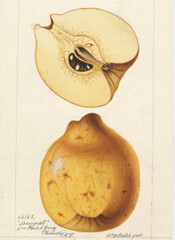


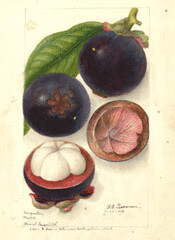
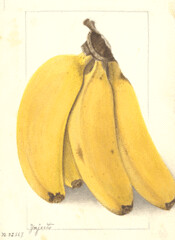

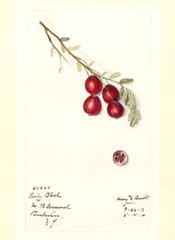
 (Janick & Moore)
 (Janick & Moore)
 (USDA)
 (Deppe)
 (Pollan)
 (Hancock)
 (Ray)
(Ray)
 (Gollner)
 (Jackson)
 (Reich)
 (Bowling)
 (Trehane)
 (Singh)
 (Stuppy & Kesseler)
 (Staub)
 (Gordon)
 (Boning)
 (Juniper)
 (Yepsen)
 (Stilphen)
 (Koeppel)
 (Chapman)
 (Gough)
 (Gough)
 (Barney & Hummer)
 (Lazslo)
 (McGovern)
 (DeWolf)
 (Sullivan)
 (Munson)
 (Brantley)
 (Freinkel)
 (Taylor)
 (Train)
 (Levin)
 (Levin)
 (Kleinberg)
 (Darrow)
 (Hancock)
 (Maas, ed.)
 (Ashton)
 (Smith)
 (Pringle)
 (Campbell)
 (Sharma)
 (Musselman)