.comment-link {margin-left:.6em;}

Fruit Blog Header.jpg
APPLES - BRAMBLES - CITRUS - GRAPES - NUTS - PAWPAWS - PEARS - PERSIMMONS - STONE FRUITS - STRAWBERRIES - FORUM

Cherimoya
My cherimoya, shortly before it became smoothie fodder.

Archive of past images


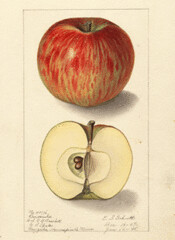
AppleBorovinka


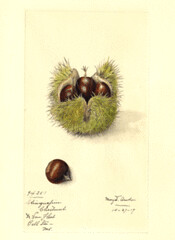
Chinquapin

Recent Cultivar Releases
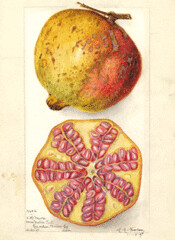
Pomegranate

Current Work in Pomology

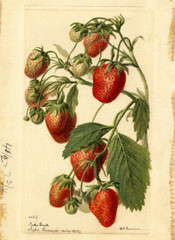
StrawbParkerEarle


QuinceBourgeat


Atom Feed

Powered by Blogger

Add to Technorati Favorites

August 31, 2008

More David Karp, this time on citrus greening

Here--before I let another one slip by:

Deadly Pathogen Harms Florida Citrus Groves (New York Times)

I really shouldn't enjoy something so horrible and damaging, but I still kind of get a kick out of the name huanglongbing. I'm so easily amused.

This disease has been hovering on the margins for a while now, having been reported in Miami three years ago, and it was just a matter of time until the panic struck the industry in a big way. And with good reason--unlike citrus canker, which is mostly a cosmetic problem, greening truly ruins fruit and trees. Florida's citrus industry is in bad enough shape already--many growers have sold out to developers in recent years (one grower told me that his kids could work his groves for thirty more years and not make as much money as he could make selling the land, although that was three years ago, before real estate tanked).

This, to me, is a perfect case for transgenics. There are essentially no resistant cultivars, no real obvious cultural solutions (aside from the "plant 'em close together and get what you can before they all die method" which strikes me as dubious and inefficient, and the "plant 'em with guava" method, which seems unlikely but would have the nice side benefit of putting more guava on the market if it did.) Breeding citrus (as I've mentioned before) is not a simple or easy thing to do, and even if it was, varieties capable of truly replacing those currently in place in Florida are almost certainly a couple generations away. Assuming you could convince people to replant at all.

Labels: , ,

Candy Cots?

I try hard not to miss linking to any articles by David Karp (The Fruit Detective), but I let this one slip by a while ago:

Sweet Rewards for Apricot Explorers (New York Times)

I would love to see some more apricot options out there. I have had good apricots, but most of them were a long time ago, and unlike many stone fruits, moving some place where they can be grown and buying them from the farmer's market hasn't really helped. Okay, it's helped some, but even 'Blenheim', which I'd heard good things about for years, has repeatedly proven rather unsatisfactory. Virtually all apricots I've tasted recently have been unimpressive. The very best of the Blenheims I've had were sweet, with a touch of tartness, but no distinct flavor beyond that, and no real aroma, either. My two-year-old was sufficiently unimpressed that she decided to chew on a lemon instead (although to be fair, she was upset with the results of that, as well).

It's interesting to me that it's taken this long for such supersweet apricots to be introduced to this country if they've been known for a while. Doesn't it seem like anything extremely sweet has pretty obvious commercial potential? Of course it wasn't that long ago these were locked behind an iron curtain, and the Central Asian republics hadn't been at the forefront of anyone's mind in a while, with the exception of a few botanists and oil and gas tycoons (and maybe Borat fans). I have to say I really don't like the name "Candy Cot"--fruit names really shouldn't be cutesy, in my opinion. This sounds like something a marketing department would come up with, not a fruit breeder. But to each his own, I guess. (And really, "candy" can't be too far off at 26 degrees Brix).

Apricots can be kind of tricky in their climate requirements: they tend to have a fairly high chilling requirement (frequently 700-1200 hours, though Blenheim and a few others are a bit lower--more like 400-500), which excludes them from many warm climate regions, but they also have a tendency to get clobbered by changes in winter temperature, and, most critically, the habit of early flowering means that late frosts can wipe out crops in many of the areas with enough chilling to grow them.

I did see a pair of very low chill hybrid apricots at the University of Florida. These are crosses with a selection of Prunus mume from Thailand. Prunus mume is also known as Japanese apricot (or just 'mume' or 'ume') and although lower chill than the standard apricot (Prunus armeniaca) is generally kind of borderline in as far as chill in Florida itself. I asked Wayne Sherman, the retired stone fruit breeder from U.F., about the hybrids, and he seemed a little non-committal about their prospects--probably not a promising sign, given his almost universal enthusiasm for every other tree I asked him about there.

There are a few other armeniaca x mume hybrids out there, though none of the others are to my knowledge the product of intentional crosses. These include 'Shirokaga' and 'Bungo' (a name which has always amused me). I have no idea what chilling requirements are on these, but an Australian study found 'Bungo' poorly adapted for subtropical conditions.

Labels: , , , ,

October 24, 2006

The Anti-Ethylene

Ethylene is the simplest of the plant hormones, just a pair of carbons and four hydrogens (technically it should be ethene according to the current system of nomenclature, but the old name has stuck). In basic terms, it serves to prod plant development forward, hastening the opening of flowers, the shedding of leaves, and, importantly, the ripening of fruit. This is the reason behind the old trick to ripening tomatoes by putting them in a bag on the counter (to concentrate the naturally produced ethylene) often with an apple (to produce even more ethylene.) It's produced as a reaction to stress, which is why the ancient Egyptians were able to speed ripening in sycamore figs (Ficus sycomorus) by making cuts in them.

Ripening fruit is a good thing if you're ready to eat it, but if you're trying to store the fruit, especially for an obscenely long period of time, you want it in as close to stasis as you can get, not pushed along by ethylene. Enter 1-methylcyclopropene, aka 1-MCP, aka SmartFresh. 1-MCP has some chemical similarities to ethylene, but it turns out to mostly inhibit the effects of ethylene by preferential attachment to the ethylene receptor, allowing fruits to be stored for otherwise impossible lengths of times. The results aren't quite the same as fresh-picked, but in some cases it may be close enough. Although there are questions whether the ability to sell year-old apples is really a good thing.

Anyhow, this was basically intended as a lead in for David Karp's new article on 1-MCP (and apples, mainly) in tomorrow's New York Times, which through some miracle of time travel, you one can read already, here. (Free log-in required...eventually the story won't be available for free, but by then it ought to be copied illegally a half-dozen places if precedent holds.)

Update: For a look at the effects of 1-MCP, take a look here.

Labels: , ,