.comment-link {margin-left:.6em;}

Fruit Blog Header.jpg
APPLES - BRAMBLES - CITRUS - GRAPES - NUTS - PAWPAWS - PEARS - PERSIMMONS - STONE FRUITS - STRAWBERRIES - FORUM

Cherimoya
My cherimoya, shortly before it became smoothie fodder.

Archive of past images


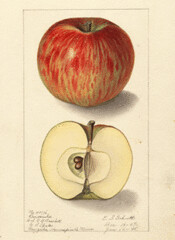
AppleBorovinka


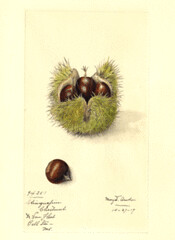
Chinquapin

Recent Cultivar Releases
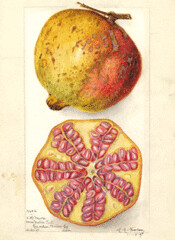
Pomegranate

Current Work in Pomology

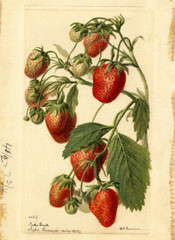
StrawbParkerEarle


QuinceBourgeat


Atom Feed

Powered by Blogger

Add to Technorati Favorites

September 21, 2008

When Citrus Goes Feral

I've posted a few times in the past about the looming threat of citrus greening in the U.S. One of the biggest problems underlying this issue is the staggering quantity of abandoned citrus groves in Florida:

Abandoned Groves a Citrus Greening Threat (The Ledger, Lakeland, FL)

The groves serve as breeding grounds for the citrus psyllid, which transmits the bacterial disease. According to the article, a recent USDA survey calculated that there are 129,869 acres of abandoned citrus groves in Florida, roughly a fifth of the citrus acreage in Florida. That's 202 square miles!

Disease threats like this are hardly possible to eradicate even with careful management, and abandoned groves are everywhere in Florida. As I've mentioned before, the citrus industry in Florida hasn't been in great shape for a while, and greening isn't helping. And although the psyllid and greening are the current focus, feral groves are a ready reservoir for all kinds of pests and diseases.

But although a clear threat, abandoned groves in Florida also represent an opportunity. For one thing, they represent thousands of acres of quality agricultural land, sitting unused. This could be in the form of a new crop, or in rehabilitating the old. By virtue of being abandoned, these groves are basically "instant organic". Companies such as Uncle Matt's Organic have been rehabilitating some of these groves and producing organic citrus and citrus products. Because of the significant premium enjoyed by organics, these groves don't need to attain full commercial yields to be profitable, and a little regular maintenance can make a big difference in keeping diseases and pests from running wild.

(I met Uncle Matt last winter in Florida--he's a nice guy with a quality product. He's got a couple of short videos up about organic citrus growing, and I'm hoping for more in the future--the next one is supposed to be on disease control.)
Blogged with the Flock Browser

Labels: , ,

August 31, 2008

More David Karp, this time on citrus greening

Here--before I let another one slip by:

Deadly Pathogen Harms Florida Citrus Groves (New York Times)

I really shouldn't enjoy something so horrible and damaging, but I still kind of get a kick out of the name huanglongbing. I'm so easily amused.

This disease has been hovering on the margins for a while now, having been reported in Miami three years ago, and it was just a matter of time until the panic struck the industry in a big way. And with good reason--unlike citrus canker, which is mostly a cosmetic problem, greening truly ruins fruit and trees. Florida's citrus industry is in bad enough shape already--many growers have sold out to developers in recent years (one grower told me that his kids could work his groves for thirty more years and not make as much money as he could make selling the land, although that was three years ago, before real estate tanked).

This, to me, is a perfect case for transgenics. There are essentially no resistant cultivars, no real obvious cultural solutions (aside from the "plant 'em close together and get what you can before they all die method" which strikes me as dubious and inefficient, and the "plant 'em with guava" method, which seems unlikely but would have the nice side benefit of putting more guava on the market if it did.) Breeding citrus (as I've mentioned before) is not a simple or easy thing to do, and even if it was, varieties capable of truly replacing those currently in place in Florida are almost certainly a couple generations away. Assuming you could convince people to replant at all.

Labels: , ,

July 21, 2008

Asian citrus psyllid is knocking on California's door

And where they psyllid goes, so goes the huanglongbing:

Disease-carrying insect poses threat to citrus (San Diego Union-Tribune)

I'm going to be pretty bitter if California winds up with every citrus disease known to man when I had to leave my awesome potted mystery lemon behind to move here. (I did get a tangerine with the new house as a consolation prize, and some day, if they ever get around to ripening, I'll have 'Moro' blood oranges, too.)

Labels: , , ,

May 5, 2007

A few more links, while I'm at it

Just a collection of interesting fruit news links:

Stinkless Durian: Fans claim this takes the fun out of it, and I suspect it would. I also wonder what it does to the flavor, considering the significant link between aroma and taste? I'd be curious to learn the genetics of durian stink, too.

Bruce Mowrey: Another fruit breeder profile in the mainstream press (too bad they spell the name wrong). Bruce actually now heads the whole breeding department at Driscoll's, so he's not just in charge of strawberries.

Pierce's Disease Resistant Grapes: This is probably deserves a more complete write-up, given the fact that the glassy-winged sharpshooter (the vector for the disease) was recently found in Napa. That could be a very bad thing, though I'd bet it would have to be really, really bad before they started planting hybrid grapes.

Rutgers Blueberry Breeding: A little blurb on the Rutgers blueberry breeding program. The comment about blueberries needing to be blue reminded me of Paul Lyrene's pink blueberry, 'Florida Rose'. A cool idea, even if it hasn't caught on.

Indian Mangoes Finally Arrive: Coming soon to a table near you, through the wonder of irradiation!

Labels: , , , , , , , , , , ,

December 7, 2006

John C. Schmid: Scientific Breakthrough, Fire Blight

Another piece from my occasional contributor and retired Ohio State researcher, John Schmid:


One of the first things I learned when I became a technician in the Horticulture Department was just how devastating fire blight can be to apple trees and apple orchards. In the following years I tried to learn as much as was known about the disease.

I learned bacteria that are normally found in orchards cause fire blight. The bacteria can enter a tree through the pollen tube of an open flower during bloom, at the tips of growing shoots, through wounds such as from hail or careless mowing, or less likely, by bark beetles boring into the trunk.

Cultivars and rootstocks differ in their susceptibility. 'Jonathan', 'Rome', and 'McIntosh' are very susceptible to fire blight, while 'Delicious' and 'Golden Delicious' are very resistant. Susceptible rootstocks, such as M.9 are vulnerable to fire blight strikes to root suckers. This can leave you in the unenviable situation of having the cultivar untouched by disease; but with the roots, killed by the bacteria, the tree dies.

Yet, much remained unknown. Antibiotic sprays seemed of some help in preventing outbreaks, but were expensive and had to be applied multiple times during the spring. They also had to be applied every year because no one could predict when infections were likely and they proved to be of little use after an outbreak started.

Young orchards, in their third or fourth year were often struck when just coming into production. The grower is left with no income to offset the cost of establishing, training, and maintaining the orchard through the early years.

Twice in my years at Wooster, southern Ohio growers lost their apple crops to a late spring frost or freeze. We sympathized with them even more as the next year brought horrendous outbreaks of fire blight. It was just one thing after another for those unlucky growers.

Skip ahead a few years. Dr. Ferree and his graduate student, James Schupp (now Dr. Schupp at Penn State U.), and I decided to stop by the small orchard where Jim had his research. The experiment was in its third year and involved taking physiological measurement on 'Golden Delicious' trees that carried differing crop loads. The treatments included the extremes; no thinning at all on one end and no crop, achieved by complete flower removal on the other. These treatments had been applied to the same trees for three consecutive years.

We had just gotten out of the car when we noticed that trees scattered throughout the orchard were dead, all the foliage was brown and still clinging to the branches, a sure sign of fire blight. Incredibly, the trees around them were completely untouched. We were shocked, the trees were all 'Golden Delicious'; it was rare to even see a small fire blight strike on a 'Golden Delicious' tree.

Jim quickly checked his treatment map. All of the dead trees were of one treatment; complete flower removal.

The thunderbolt hit! Everything clicked into place. Discussing it later, it was the same for all of us. I honestly can't say who mentioned what or when, but here is what we all knew in an instant and quickly discussed among ourselves.

Removing a crop for three consecutive years caused a build up of carbohydrates in the tree with no place to go. Excess carbohydrates are normally stored in the roots, but the storage capacity of the roots had been overwhelmed. I had assisted Jim in collecting data on this experiment in previous years. We had already noticed that the leaves of this treatment were much thicker, almost leathery. He had documented the increased dry weight. Now we knew the excessive carbohydrate levels throughout the tree was providing a wonderful growth medium for the fire blight bacteria. Much like diabetes in humans causes an increased risk of infection.

Young trees in their early years, growing fast without a crop would also have an increased carbohydrate level and account for their susceptibility to fire blight.

The southern Ohio crop loss to a late frost or freeze sets up the next spring's fire blight outbreak in the same way.

James Schupp in the next few weeks prepared a "note" for the Journal of the American Horticulture Society. The rest of the summer he did further research for a full paper on the subject in addition to finishing his work on the original project. The most memorable aspect of this study to me was the electron microscope photo of a cell so full of carbohydrate inclusion bodies that the cell wall had ruptured, death for the cell and a sure feast for bacteria.

This was truly a scientific breakthrough, one of the few that I saw in all my years in research. A quote by Louis Pasteur seems to be appropriate at this time: "Chance favors the prepared mind". Like many scientific breakthroughs, this was a case of pure serendipity; it was not what we set out to discover. It truly was a "bolt out of the blue",a true scientific breakthrough.


I worked with fire blight on my M.S. thesis, but in a realtively obscure context: blackberries. I'm the proud author of roughly a quarter of the literature on the fire blight in brambles (much more if you count the thesis). On apples, and pears, however, it's a major problem, and this discovery marked a significant step towards understanding the factors influencing resistance.

Labels: , , ,

November 29, 2006

And, since we're on the topic of nuts...

Protecting a Little-Known Tree From an Insidious Disease (New York Times)

Registration is of course required, and eventually it will retreat behind the great electronic subscribers-only wall.

I've touched on this disease before, but I'm always pleased to see these things getting a little play in the mainstream media. This link came via the NAFEX discussion list, and the poster (Lucky Pittman) noted that many of the "butternut" cultivars that have shown resistance have turned out to be hybrids with other Juglans species upon DNA analysis.

I'm curious to know if earlier anecdotal evidence of a correlation between bark type and resistance in wild trees has panned out (maybe the differences in bark type are the result of natural interspecific hybridization?)

Update: I just realized that the link in my previous butternut canker article to the Butternut Rescue Team website never had an address attached to it. I've fixed it there, and I might as well include it here as well: Butternut Rescue Team Homepage

Labels: , , ,

June 18, 2006

Fighting Back Against Citrus Canker

Not so long I ago I discussed the losing battle against Citrus Canker here in Florida. This evening I stumbled across an article in the Sun-Sentinel (I think it's Ft. Lauderdale, but through the wonder of the internet there's no need to know) discussing genetic efforts to combat the disease. I don't know if this battle is winnable any time soon, but if it is, it'll probably be won by these people, the folks at the University of Florida research center in Lake Alfred.

I know there are elements out there who aren't going to be happy with any genetic engineering solution, but citrus is one place where standard breeding isn't an attractive option, given the difficulties involved. I have been critical from time to time of the mindset that seems to claim that genetic engineering is the solution to all our problems, and that breeding is an out-dated thing of the past. I think that oversells genetic engineering and undersells the power of breeding. But I think this is the sort of situation that genetic engineering was tailor-made for: not replacing breeding, but solving the specific problems that breeding can't readily solve. In sweet orange you have a crop where not only is it extremely difficult to even get hybrid seedlings, but also an extremely limited germplasm base without the resistance you need anyway. Sure one can, and should work to overcome these barriers and to improve the working material through hybridization with outside species, but that's a long, hard process, and this problem is here, now. And while the magic bullet approach of genetic engineering may not be a perfect solution, it's attainable in the short term.

Labels: ,

June 16, 2006

New Black Raspberry Virus Discovered

Robert Martin, a USDA pathologist in Oregon, has described a new virus believed responsible for the growing scourge of "black raspberry decline". The disease has serious repercussions, markedly shortening the lifespan of plantings and reducing yields. Decline diseases are frequently the result of mixed infections of many viruses, making it difficult to pin down the effects of any one of them or precisely define symptoms. This new bug, however, is sufficient to cause disease all by its lonesome, and it appears readily transmitted by aphids. It's been given the catchy name "Black Raspberry Decline Associated Virus" (just rolls right off the tongue, doesn't it?), or "BRDaV".

One thing that became disturbingly clear when I was working with brambles (in my case blackberries), is that practically all of them are all but dripping with viruses. Pretty much every plant you look in. Frequently you can't see anything resembling symptoms, but they're there, lowering vigor, reducing yield, making the plants that much more susceptible to stress. And, if you're a nursery owner, just waiting to stand in the way of you shipping your plants out of state. The usual solution is to use meristem culture (the meristem region, where plants do their active growth, is comprised of cells with few or no virus particles, so plants grown from this small patch of cells will be clean). The problem is, of course, in a world chock-full of Rubus viruses, how long do they really stay clean? And do we really want to know?

Labels: , , ,

May 19, 2006

Citrus Canker declares Victory in Florida?

Well, it looks like we've officially lost the battle against Citrus Canker here in Florida. It's been pretty much inevitable for a long while, but a combination of ignorance, indifference, and selfishness has made it happen that much sooner. And now it's pretty much an inevitability that it'll hit everywhere else capable of producing citrus in the U.S. If we can't keep it from coming over national borders, where we actually have Customs inspectors, there's no way it's going to stop at state borders or "quarantine zones".

The struggle is an old one. The pathogen, Xanthomonas axonopodis pv. citri, was first found in the U.S. after being discovered on imported Japanese seedlings (it's an Asian disease). It quickly spread throughout the southeast, but aggressive eradication procedures led to a declaration in 1933 that Florida was canker free. That stuck until 1986, when it was found again, south of Tampa. A zillion destroyed trees later, it was declared eradicated in 1994, only to resurface in 1995, in a residencial area near the Miami airport. A recurrence in the area near Tampa popped up in 1997, and both areas are now in an ever expanding state of quarantine. (Read more on Citrus Canker here, on APSNet).

The quarantine involves a severe regimen of destroying all citrus within a certain distance of the infected tree, and the latest outbreaks have resulted in the loss of 1.5 million commercial trees and 600,000 home trees. It is this last group that is the likely weak link. Commercial growers know the stakes, and while the loss of a million trees hurts, citrus canker as an endemic pathogen would hurt even more, both in terms of loss of saleable product, and the loss of markets that would follow. Many homeowners, however, fail to appreciate the implications of the outbreak, and there was often resistance to reporting cases and complying with the quarantine. The Miami outbreak, at least, was probably caused by the introduction of infected ornamental citrus in 1992 or 1993.

Now, after years of continually growing quarantine zones, it looks like we might be on the verge of giving up. The USDA is considering hitting the entire state with a canker quarantine, which would be a severe blow to an already struggling citrus industry, preventing them from shipping to a number of states and countries. The alternative is an expanded quarantine zone around infected trees. Realistically, though, this battle is probably over. Although juice citrus, the mainstay of the Florida industry, will be minimally impacted, this will severely damage the fresh fruit industry.

And, sadly, the next big disease fight for the citrus industry is already looming. Citrus Greening (I like the Chinese name, Huanglongbing), a potentially more serious bacterial malady, was recently found in Florida, and has already spread to more than a dozen counties. This one at least requires an exotic insect vector (introduced to Florida already, sadly), so that at least gives us another link to attack. We'll see how this one plays out. I'm not terribly hopeful.

Labels: , ,