.comment-link {margin-left:.6em;}

Fruit Blog Header.jpg
APPLES - BRAMBLES - CITRUS - GRAPES - NUTS - PAWPAWS - PEARS - PERSIMMONS - STONE FRUITS - STRAWBERRIES - FORUM

Cherimoya
My cherimoya, shortly before it became smoothie fodder.

Archive of past images


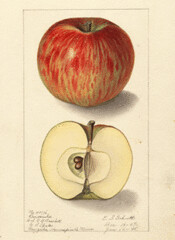
AppleBorovinka


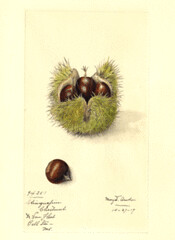
Chinquapin

Recent Cultivar Releases
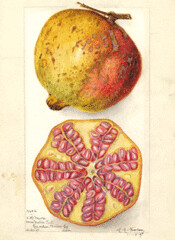
Pomegranate

Current Work in Pomology

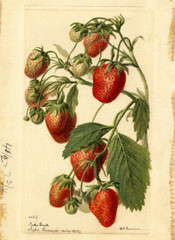
StrawbParkerEarle


QuinceBourgeat


Atom Feed

Powered by Blogger

Add to Technorati Favorites

May 26, 2008

Australian New Crops Newsletter

Just came across a collection of on-line issues of the Australian New Crops Newsletter, from 1994-2002. Lots of different crops are discussed as well as the practicalities of developing new crops, both as industries and as species.

Here are a few selected articles...I just glanced through and picked out a handful I thought might be relevant to my readers (most are quite brief):

Nashi Fruit (Pyrus pyrifolia)
The Trials of New Crop R&D: Getting the Germplasm
Longan (Euphoria longan)
Kakadu Plum (Terminalia ferdinandiaana)
Edible Indigenous Nuts of Papua New Guinea
Beach Plum (Prunus maritima)
Australian Native Citrus

Labels: , , , , ,

November 29, 2006

And, since we're on the topic of nuts...

Protecting a Little-Known Tree From an Insidious Disease (New York Times)

Registration is of course required, and eventually it will retreat behind the great electronic subscribers-only wall.

I've touched on this disease before, but I'm always pleased to see these things getting a little play in the mainstream media. This link came via the NAFEX discussion list, and the poster (Lucky Pittman) noted that many of the "butternut" cultivars that have shown resistance have turned out to be hybrids with other Juglans species upon DNA analysis.

I'm curious to know if earlier anecdotal evidence of a correlation between bark type and resistance in wild trees has panned out (maybe the differences in bark type are the result of natural interspecific hybridization?)

Update: I just realized that the link in my previous butternut canker article to the Butternut Rescue Team website never had an address attached to it. I've fixed it there, and I might as well include it here as well: Butternut Rescue Team Homepage

Labels: , , ,

November 27, 2006

Breeding nuts is nuts (okay, maybe not, but I can think of easier ways to make a living)

As I've mentioned before, breeding fruit is a long, expensive prospect, and in most cases not one that would attract anyone interested in actually turning a profit. And everything that makes fruit breeding a pain goes double for nut breeding. And yet here is some one who appears to be breeding chestnuts and hazelnuts commercially. In general, I think that's a dubious prospect, althugh we could certainly use the cultivars, but what do I know? Nuts are a little outside my area of expertise.

I don't know anything more about Badgersett than what I read on the website, but Phil Rutter, the guy in charge, has kept the place running since 1977, which suggests that he knows what he's doing. He's also founder and past president of the American Chestnut Foundation, as well as past president of the Northern Nut Growers Association (NNGA).

Anyway, just came across the site and thought I'd share.

(In other nut news, my family and I saw a really big old pecan tree this weekend. Very impressive, especially considering that pecan trees seem to me rather prone of breaking at the slightest provocation. I didn't get any pictures--we forgot the camera, but I'm going to head back, mainly to take a picture of the giant live oak nearby.

Labels: , , ,

October 11, 2006

Attack of the Almond Pirates

I heard this on NPR the other day on the way home from work...how I managed to avoid posting it this long I don't know.

Seems that some one has been stealing almonds from California's growers. And we're not just talking climbing over the fence and filling their pockets. We're talking truckloads. Eleven tractor-trailer loads this year, in one case 80,000 pounds of almonds in a single go. Almost $2 million worth so far. They're assumed to be selling them on the black market, because it's not like you can just hide nearly a million pound of almonds in your garage and sell baggies on street corners...

California's Almond Farmers Cope with Thefts via NPR (audio segment)

Update: Here's a link to a good old fashioned text version of the story, for those who can't be bothered with things like sound: Thieves Reap What Almond Farmers Sow, via The Modesto Bee.

Update 2: And, for completeness sake, a video version for those of you who want the full multimedia experience: Nut Nappers Creating Problems In Stockton (looks like they've moved onto walnuts, too!).

Labels: , , ,

May 18, 2006

Grove of American Chestnuts Found!

Looks like a whole grove of American Chestnut trees have been found! These are notable not only because there's a number of them and they appear to have escaped the blight, but also because they are at the extreme southern limit of the species and near FDR's "Little White House" in Warm Springs, Georgia.

Rare American Chestnut Trees Discovered (ABC News)

(For those who don't know and want more info on why this is signficant, try here).

Update: The original article states that there are six trees in the stand, but today on NPR the discoverer mentioned that a cursory walk around the area turned up another one nearby, so it's possible that there may be a considerable pocket of them. He hypothesized that the dry microclimate in the area may make it difficult for the blight pathogen to survive.

Labels: , , , ,

January 15, 2006

While we're on the subject...

Since we're talking about Canadian nuts, I might as well go ahead and post this:

A Nut Grower's Manual for Eastern Ontario and Western Quebec

From ECSONG, the Eastern Chapter of the Society of Ontario Nut Growers. Lots of good info in there. ECSONG is one of the forces behind the Butternut rescue effort I mentioned below.

Labels:

Will the Butternut go the way of the American Chestnut?

A while back, I posted on the fate of the American chestnut, nearly annihilated by a fungal disease, and now, with the help of a dedicated group of scientists and hobbyists, making a slow comeback. The situation for the chestnut was, and to an extent, remains, pretty bleak, because the loss has been so thorough.

Sadly, a the same scenario seems to be playing out again with another American nut tree, the butternut (Juglans cinerea). Beginning in the late sixties, a new disease called Butternut Canker began to spread, and today over 80% of the butternut trees have already been lost. Still, the situation has not yet reached the point that the chestnut or the elm did, and the possibility remains that the butternut can be saved. Scientists have found evidence that resistant trees may exist, and that there may even be a particular bark phenotype associated with this resistance.

For those interested (particularly those in Ontario and Quebec where the most native butternut still survives), a handful of organizations are putting together a Butternut Rescue Team. Efforts to save the butternut are nowhere near as organized or extensive as those for the American chestnut (ever notice how these things usually only get into full swing long after the best opportunity has slipped away?) so they can probably use any help you can offer.

I remember finding butternuts in the woods behind my grandparents' home in western New York, and I find it tremendously depressing to think they might disappear.

Update (a year late):I just realized I never included the address in the link for the Butternut Rescue Team. It's fixed now.

Labels: , ,

November 18, 2005

Nuts!

Since I long ago decided that the Fruit Blog should annex the realm of nuts (see past posts on chestnuts), I figured I'd point out that I've just added a link to the Northern Nut Growers Association over on the sidebar. They're a good source of information on nut growing, and they've got a nice collection of related links and a program of research grants. They also have a working relationship with NAFEX and share an impressive lending library of fruit and nut resources with them.

Labels:

June 26, 2005

More old tree stuff.

Before I posted the article on medlars and apparently became the source of all knowledge on that particular species, the article most Google-searchers seemed to be gravitating towards was the one on the Endicott Pear, America's oldest fruit tree. In that vein, and since I've already established that I'm counting chestnuts as fruit, I thought I'd point you folks to these nifty illustrations of ancient (350+ years old) Spanish Chestnut (Castanea sativa) trees growing in the estate of Croft Castle, near Leominster, U.K. They call Phytophthora a virus, rather than a fungus, but we'll forgive them. The artist is eighty, after all.

That page is part of a bigger ATF (Ancient Tree Forum) page, hosted by the U.K.'s Woodland Trust. Though very little of it has anything to do with fruit, there are a number of very old, very impressive trees on display there, and a lot of good information on the how's and why's of preserving them (the website is very much focused on the U.K., though there are links to organizations in other countries). It never fails to amaze me how a tree, something which has aboslutely no way to avoid anything in its environment, can still adjust and survive for hundreds of years, molded and changed by its experiences.

The other fruit angle on this whole Ancient Tree site is that they are selling wine from Comte Cathare to support their preservation efforts. I'm a big fan of wine and grapes, and it's a good cause, but they lose points by buying into the whole biodynamics thing, which is a big load of nonsense, in my humble opinion. Never underestimate the ability of human beings to take a few vaguely good ideas and then build out from them to create a whole bunch of crap. Ah well. I'll save that rant for another day.

By the way, I'm back from vacation.

Labels: , , ,

March 16, 2005

The Return of the Chestnut

If there were people other than me reading this page, some of them might complain that this isn't strictly a fruit post. To them I would say A) nuts are fruit, and B) it's my blog, and I make the rules. (I may eventually allow Mrs. Evil Fruit Lord to sneak some veggies on here at some point, so I might as well start pushing the envelope a bit anyhow).

Most of us probably don't eat many chestnuts, but it wasn't so long ago that chestnuts, primarily gathered from the wild, were a major cash crop and food source for families in the Appalachians. The American chestnut (Castanea dentata), was once a major component of the eastern forests, often growing to a hundred feet or more. It also formed an important food source for wildlife and livestock, as well as valuable timber.

Most of us know the story of Dutch Elm disease. Not as many are aware that the same story has played out many other times as well. Butternut (Juglans cinerea), for example, is currently battling an imported fungus called Butternut canker which first appeared in 1967. In the case of the American chestnut, the attacker hitched a ride with nursery stock imported into New York in 1904, and by the 1940s Chestnut Blight had killed an estimated three billion trees. The once towering giants were reduced to understory shrubs, constantly suckering and dying back from the fungus.

There are still chestnuts around, of course, but in general these are its Asian and European cousins, which are resistant. The American chestnut has mostly dropped out of sight, except as the occasional diseased shrub. Eventually breeders began to work with chestnut, trying to breed trees which retained the character of the American chestnut, with resistance to the blight. Unfortunately, early breeders tried to do this by repeatedly crossing American chestnuts with Chinese, which resulted in blight resistant trees with a distinctly Chinese character. Later breeders have discovered the blight resistance is likely controlled by only two or three genes, and so by backcrossing to American chestnuts, they have managed to retain a large portion of the genes as American, while transferring resistance from the Asian species. A rare few American chestnut trees which escaped the blight have helped to maintain the genetic diversity of the seedling trees.

There appear to be a couple of organizations working to restore the American chestnut to our forests and yards. The American Chestnut Foundation and the American Chestnut Cooperators Foundation both support and perform research on blight resistance, and both provide American chestnut seeds and seedlings for planting. I'm really not clear on the differences between these two groups...they may be the same thing, or they may fight bitter chestnut research turf wars for all I know. The ACF has Jimmy Carter on their page, which scores points in my book. Either way, it's a noble cause. For Canadians, there's also the Canadian Chestnut Council, which conducts similar efforts north of the border, although I was disappointed to learn that unlike American cheese, which they call "Canadian cheese", they still call it the American chestnut.

Labels: , ,