.comment-link {margin-left:.6em;}

Fruit Blog Header.jpg
APPLES - BRAMBLES - CITRUS - GRAPES - NUTS - PAWPAWS - PEARS - PERSIMMONS - STONE FRUITS - STRAWBERRIES - FORUM

Cherimoya
My cherimoya, shortly before it became smoothie fodder.

Archive of past images


AppleBorovinka


Chinquapin

Recent Cultivar Releases
Pomegranate

Current Work in Pomology

StrawbParkerEarle


QuinceBourgeat


Atom Feed

Powered by Blogger

Add to Technorati Favorites

January 4, 2009

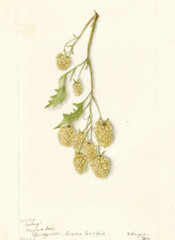
Primocane-fruiting black raspberries, revisited

I was pleased to find a note in my e-mail this morning from Pete Tallman, developer of the 'Explorer' black raspberry. I mentioned 'Explorer' two years ago (have I really been at this that long?) as an exciting development in a crop in which very little breeding has been done (and, frankly, very little breed success obtained).

Unfortunately, 'Explorer' has not really been a success. I've seen it twice, both times under tunnels: once in Pennsylvania, where it had virtually no fruit and a powdery mildew problem, and another time in upstate New York, where the plants looked healthier but fruit set was still poor, though better. I was rather disappointed, as I'd been pretty excited about the thing.

Tallman's message today explains a big part of the problem: 'Explorer' is not self-fertile. Apparently his field featured things that flowered and provided adequate pollen at the right time, so the problem was never evident under his conditions. This fits with what I saw: the tunnel at Penn State where I saw it had, if I recall, only one other variety in it, while the one in NY, where it had at least some fruit, had several.

While unfortunate, this isn't entirely shocking, as self-incompatibility is fairly common among wild, diploid Rubus, and 'Explorer' is not far removed from the wild source of the primocane-fruiting trait that Tallman discovered. (Not surprisingly, the trait hasn't persisted very long in most commercial types).

Anyway, all is not lost. Tallman has selected another primocane-fruiting black raspberry, dubbed PT-2A4, which does pass the self-compatibility test, and has other desirable traits compared to 'Explorer'. As he describes it:
"Compared to Explorer, the PT-2A4 berries are larger, higher drupelet count, and smaller seeds. PT-2A4 holds my all-time record for a single primocane black raspberry at 3.82 grams. Admittedly, that's a max berry, not an average, but I gotta track something, and average isn't awfuly interesting. Maybe with a little fertilizer this year I could break 4 grams. Unfortuantely, PT-2A4 hasn't captured the reduced thorniness of Explorer, so there remains further breeding down the road to see if I can tie that trait back in again."


He also included a link to his website, which includes a page for PT-2A4.

Labels: , , , , ,

October 2, 2008

'Honeycrisp' and the U. of Minnesota Apple Breeding Program

Just came across a nice piece on the University of Minnesota apple breeding program:

With Honeycrisp's patent expiring, U of M looks for new apple (CityPages.com)

I thought the article was a decent "layman's" sort of overview of the UMN apple breeding program, and there's certainly plenty of interest in the program these days thanks to 'Honeycrisp', which has seen a surge of popularity unlike anything I've seen for an apple variety in my lifetime. 'Honeycrisp' at one point commanded an enormous premium, though massive plantings have begun to drive prices down (and there are those who consider it to have been grossly overplanted--many of the trees still due to come into production in the next few years. We'll see how that pans out...)

I like 'Honeycrisp' quite a bit, but I have a hard time believing it really ranks with Google as one of "25 Innovations That Changed The World" (Warning—PDF). It's certainly seen quite the burst of popularity, and yes, it's got an unusual texture, but its basically just a relative outlier on an existing scale of textures. I'm told there are other varieties with a similar breaking texture out there, such as 'Red Baron' (though admittedly I haven't had them). It's definitely good, and it's definitely interesting, but it's an incremental development, not a revolutionary one.

I think the argument is that it was revolutionary in the sense that it revitalized a lot of orchards in the Northeast and upper Midwest, particularly small family farms, and it did in fact do that to an extent. However, I think that's partly due to good marketing, and partly an element of "right place, right time". Full of varieties 50+ years old and little recent momentous development, the market was ripe for something new in the way of apples, and 'Honeycrisp' was distinct enough to fill that niche.

I'm still wondering what the newest UMN apple release is going to be named--last time I spoke to some one who'd heard the name, they treated it as though it was secret on par with a nuclear launch code (even while admitting it was being used freely in some circles). So it better be good.

Update: I noticed that the USDA site on 'Honeycrisp' that I linked to has old, incorrect pedigree--Macoun x Honeygold. This was disproven via molecular fingerprinting some years ago (this was actually the subject of the second Fruit Blog post ever). One parent is 'Keepsake', the other unknown.

I've been entertaining myself playing with grape marker data from the USDA, checking out possible parents for old American cultivars. That's how you know you're a big fruit geek--when you spend hours comparing pedigree data for fun...
Blogged with the Flock Browser

Labels: , , , ,

July 19, 2008

The Origin of the Tayberry - Joan Morgan's Fruit Forum

Since we're talking about SCRI and Rubus, I figured I'd pass along this link to a story I came across on Fruit Forum about the origins of the Tayberry (essentially an improved Loganberry), written by Derek Jennings, the breeder.

The Origin of the Tayberry (Joan Morgan's Fruit Forum)
Blogged with the Flock Browser

Labels: , , ,

July 6, 2008

The Cornell Apple Breeding Program

I just came across this piece on ScienceDaily about the Cornell apple breeding program and its breeder, Dr. Susan Brown. Susan a former colleague of mine and a really nice woman, and she runs a pretty cool program. The New York State apple breeding program has been around for a long, long while, and it's had lots of successes: probably the one the most people see regularly is 'Jonagold' (which, following a rather disappointingly unoriginal naming scheme that appears to have had a run of popularity, is a cross of 'Jonathan' and 'Golden Delicious'), but there are many other commercially successful apples to come out of it as well. 'Empire' is a long time favorite of mine that I sometimes see in stores (though not nearly as much now that I don't live in New York), and 'Macoun' and 'Cortland' are well known in their own niches as well. ('Liberty' is popular in some circles for its disease resistance, though I have to say it never really impressed me in terms of eating quality).

Anyway, I'm always pleased to see fruit breeders popping up in the media, especially ones I know.

The Time is Ripe For An Apple That Tastes Like Berries And One That Doesn't Brown (ScienceDaily)

(Speaking of fruit breeders in the media, look for yours truly on the Food Network sometime in the near future!)

Labels: , ,

June 4, 2008

Ed Swanson article

I mentioned the contributions of "amateur" grape breeders back in the "Crops Not to Breed" post, so I thought I'd pass this along:

Hardiness x Appeal (Wines & Vines)

Ed Swanson is an amateur grape breeder in Nebraska. It wasn't that long ago that quality production was pretty much an impossibility in the coldest parts of the country (sure, you could baby along some of the hardier viniferas, but only by going to elaborate lengths and great costs), but thanks to men like Elmer Swenson and now Ed Swanson, cold climate viticulturists have a few more options.

Labels: , ,

May 25, 2008

Crops Not to Breed

This link came across a mailing list that I'm on the other day (I actually tried to post this one from Mexico too, but my phone doesn't appear to do cut and paste, and I wasn't able to stomach typing in the whole link). It's part of a larger work, on breeding for disease resistance, Return to Resistance, which merits at least a closer glance by any of you breeding types out there, but this is the chapter that got me (and the mailing list) riled up:

Chapter 28. Crops Best Avoided By Breeding Clubs (International Development Research Centre)

I like the idea of "breeding clubs" formed by amateurs, and I do agree with some of the things selected to be on the list. Even the cleverest amateur is not going to make much headway breeding bananas, or garlic, or turmeric without specialized facilities and supplies. Seeing as how it's next to impossible to even get viable seeds of these things, I'm not sure it would even occur to many people to try. But some things on the list really surprised me. Especially grapes.

Grapes, in my mind, are actually fairly well-suited to breeding by amateurs. They readily form seeds, they are fairly easy to cross, easily propagated, and can produce widely segregating viable hybrids with relative ease. Many amateur grape breeders have been important to the development of the crop: T.V. Munson, Hermann Jaeger, Elmer Swenson, for example. Even the great French breeders who gave us the widely grown French hybrids (Couderc, Seibel, Seyve, etc.) were not trained breeders.

The argument against grape breeding has always been tied to the importance attached to variety in marketing grapes. This is only a factor, however, when one can grow the traditional varieties. Thanks to amateur breeders, viticulture has made a push into the most extreme regions, and as regional production becomes popular, a "local" varietal may well (and in some cases already has) become a selling point, not a liability.

Labels: , , ,

May 5, 2007

A few more links, while I'm at it

Just a collection of interesting fruit news links:

Stinkless Durian: Fans claim this takes the fun out of it, and I suspect it would. I also wonder what it does to the flavor, considering the significant link between aroma and taste? I'd be curious to learn the genetics of durian stink, too.

Bruce Mowrey: Another fruit breeder profile in the mainstream press (too bad they spell the name wrong). Bruce actually now heads the whole breeding department at Driscoll's, so he's not just in charge of strawberries.

Pierce's Disease Resistant Grapes: This is probably deserves a more complete write-up, given the fact that the glassy-winged sharpshooter (the vector for the disease) was recently found in Napa. That could be a very bad thing, though I'd bet it would have to be really, really bad before they started planting hybrid grapes.

Rutgers Blueberry Breeding: A little blurb on the Rutgers blueberry breeding program. The comment about blueberries needing to be blue reminded me of Paul Lyrene's pink blueberry, 'Florida Rose'. A cool idea, even if it hasn't caught on.

Indian Mangoes Finally Arrive: Coming soon to a table near you, through the wonder of irradiation!

Labels: , , , , , , , , , , ,

A short blurb on Dennis Werner...

This isn't an incredibly in depth article, but I'm always pleased to be supportive on those rare moments wwhen the mainstream press recognizes the work of fruit breeders. My exposure to Werner has been more in his role as an ornamental breeder, but there's no question that he's made considerable contributions to peach breeding as well, and he seems like a genuinely nice guy.

Professor's Work Is Just Peachy (News & Observer, Raleigh)

Labels: , ,

February 16, 2007

Grape breeder Bob Zehnder Dies

I just got word via the grape breeders list that Bob Zehnder has died.

Zehnder was the last of "the three Bobs", the others being Robert Farrer and Robert Dunstan, "hobby breeders" who pushed the limits of southern grape breeding and left behind a rich legacy of promising, yet surprisingly little known, germplasm. He conducted his work in Summerville, SC, under perhaps the highest conceivable disease pressure. He was perhaps among the last of the old generation of passionate amateurs in this field, though the baton has been passed to quite a capable field of both amateurs and professionals.

He was also a genuinely nice guy--generous, friendly, and kind. The field of grape breeding and the world in general are richer for having had him in it.

Cliff Ambers visited Bob a few years ago, and put together this page.

Floridagrapes.com has a list of his selections, which gives you an idea of the extent of his contribution.

(Sorry there haven't been much in the way of updates around here lately. I'm very, very busy. I promise I'll pick up the pace in a few months when I'm over this hump and back on my feet again.)

Labels: , , ,

December 13, 2006

One more step towards the "New Eastern Viticulture"

I've mentioned Clifford Ambers before in connection with his research on the origins of Norton, but I thought I'd mention some of his other efforts, as he's just put out a ton of new data. In addition to his historical research, he's also a grape breeder, working towards what he calls the "New Eastern Viticulture", utilizing selections of the local wild grapes and old cultivars to create cultivars that are actually adapted to the humid weather and temperature extremes of eastern North America. It's an exciting idea, and one I've been keeping tabs on for a couple of years now.

He's got a bunch of information up on his website, including lists of crosses (lots of them this year!), and now his "virtual vineyard" with vineyard data and descriptions with photos of nearly everything in the vineyard! Even if you're not interested in what he's working on (though I can't imagine why you wouldn't be), it's a nice source of data and photos of some not especially common cultivars.

Labels: , ,

November 18, 2006

P9-15: The Lure of the Vine

I've often thought it might be nice to do book reviews here, since there's nothing that brings me joy like a good fruit book (okay, maybe there are a few other things). So far, though, the closest I've come was an earlier post on Wickson's California Fruit, which was as much about Wickson as it was the book.

A while back, I came across a book called P9-15: The Lure of the Vine, by Thomas DeWolf, on Amazon. I'm always excited to people writing things other than textbooks about plant breeding, and grapes have a special place in my heart, being the first fruit that I worked with. It outlines the history of attempts to interbreed muscadine grapes with bunch grapes, touching on the characters involved and the crosses made that led to the final product, a hybrid called P9-15. (DeWolf regards P9-15 as the pinnacle of this effort, although one of its offspring, 'Southern Home', was released as a cultivar by the University of Florida). Despite being members of the same genus, muscadines and bunch grapes do not easily interbreed, having differing chromosome numbers, and when they do the offspring are nearly always sterile. Only a handful of barely-fertile F1 hybrids have been created, such as NC 6-15 and B4-50, and these few key bridges have been the critical links to such efforts at interbreeding.

It's not a very big book, only 108 pages long, and it's not the best written work I've ever encountered. It's a little scattered and disorganized, and much of it could probably do with some serious editing, like the interview with Bob Zehnder, which is presented in it's entirety, complete with things like:
TBD: Are you having a problem hearing me?

Zehnder: Yeah.

TBD: Okay. I have you on my speakerphone. That's the reason...

It's from Hats Off Books, which I believe may be a self-publishing enterprise, and DeWolf's approach is that of a curious layman (I think he's a retired lawyer, but I couldn't find much), rather than an expert on grape breeding, so the result is a little unpolished, though his passion for the subject is obvious and endearing. Despite all the flaws, it's still well worth a read. It's full of facts, much of it material concerning old southern breeding programs or those of individuals like Bob Dunstan, Bob Zehnder, or Joseph Fennell, that would be very difficult to track down. Mostly, though, I'm excited to see some one telling this story. There are hundreds of these breeding stories, and they are part of why I love breeding and why I want to be part of it. Stories like the introduction of day-neutrality from wild strawberries, the development of primocane fruiting blackberries, self-fertile muscadines, or the Southern Highbush blueberry. Each of these represented a fundamental change in the way these fruits could be grown, and each was the result of a combination of luck, hard work, and the skills of several brilliant breeders. And each is its own exciting story, waiting to be told. DeWolf has told this one, and I'm grateful that he did.

This particular story is one that has really only begun. 'Southern Home' is the only cultivar to incorporate both muscadine and bunch grape germplasm, and it has really only succeeded as a backyard variety. It is also mostly muscadine in its background, while the real potential, I think, lies in incorporating a few key muscadine traits, particularly disease resistance, into bunch grapes. This process has only begun, but in recent years a gene for powdery mildew resistance, Run1, has been moved from muscadines into a bunch grape population and mapped, coming through the NC 6-15 hybrid (a cross of a muscadine (G52) and Vitis vinifera (a seedling of 'Malaga')).

Anyway, at $11.95 for just over a hundred pages, P9-15 probably isn't for everybody. But for those with a particular interest in grape breeding, especially in the south, and a willingness to look past the occasionally scattered presentation, it's an interesting read and a valuable resource.

Buy P9-15: The Lure of the Vine from Amazon.

Labels: , , , ,

August 15, 2006

Ettersburg Apples

I've honestly never heard of Greenmantle Nursery, but I'm really impressed with the descriptions of Albert Etter's apples, as well as their crab apple page. It's good to see Etter getting a bit of his due. I'd like to find some one selling his strawberries as well.

Anybody ever seen 'Alaska'? I never have...I'm just curious if it really is as truly white as the picture on that page shows.

Labels: , , ,

July 5, 2006

Dr. Harold Olmo (1909-2006)

I just heard through the grapevine (er, grape breeders mailing list), that Dr. Harold Olmo has died. I've never met the man, but it's impossible not to feel some connection when you've read many dozens of papers (it's essentially impossible to study grape genetics and not become familiar with his work) and seen nearly as many grapevines he produced, and although he clearly lived a very long, very full life it's always a bit sad to see the end of some one who has contributed so much to the field.

Dr. Olmo worked as a fruit breeder at the University of California at Davis, from the 1930's until his retirement in 1977, and maintained his involvement even into his emeritus years. An accomplished grape breeder and geneticist, his work in table grape breeding has laid the foundation for much of today's seedless grape industry, and many of his cultivars are still widely grown. He traveled the world in search novel germplasm, combing the original range of Vitis vinifera for new and interesting vines and nut trees, even braving tribal warfare to scour the hills of Afghanistan with an escort of local soldiers. The material he brought back fills the national clonal germplasm repository in Davis and his herbarium specimens are a valuable resource to botanists, particularly given the difficulty involved in obtaining Afghani specimens at this time.

Although Dr. Olmo may be gone, his cultivars and their descendants will live on, as well his contributions to the literature. If I were to leave a tenth the legacy he has, I would consider myself to have been a success as a breeder and scientist.

A more complete account of his life is available in a UC Davis press release.

My sincerest condolences go out to his family and those close to him.

Labels: , ,

January 3, 2006

Private Peach Breeding Programs

Most fruit breeding is a costly, time-consuming endeavor, and as such has mostly been the realm of either government researchers or hobbyists working on a small scale. That's why I was surprised to note (in discussions on the NAFEX mailing list), that there are at least two signficant private peach breeding programs in this country, Paul Friday's Flamin' Fury Peaches, and Fruit Acre Farms Stellar Series of peaches. Both are located in Michigan, and both seem to have gotten good reviews from growers and researchers. As strongly as I feel that governments ought to be supporting fruit breeding, the reality is that funding for such things continues to dwindle, and programs like these will be needed to pick up the slack. I hope breeding continues to be a profitable and rewarding enterprise for them both.

Anyway, I'd heard of both series before, but I guess I'd never thought about where they came from. I'm curious to know if there's some connection between them...there's clearly a rivalry there, and if you read a bit you'll notice that the Fruit Acres' breeder, Annette Bjorge, says her father, who started the program, was named James Friday. Seems like a big coincidence, but maybe there are just lots of Fridays running around growing peaches in Michigan?

I'll be back home and back to work tomorrow, and hopefully I can arrange for some interesting posts inspired by the new books. I've been enjoying my new copy of Janick and Moore's Advances in Fruit Breeding while watching TV tonight.

Update: I was sufficiently excited to learn about two private peach breeders I didn't know about that I forgot a couple I did:

Zaiger Genetics. Actually, they do a whole lot more than just peaches. I find all the goofy names they give their various interspecific hybrids a little obnoxious, but it's hard to deny that they've been productive, and that some of the results are pretty good (though to be honest I've only tasted a handful of their many, many releases).

Sun World, who both breed and produce a range of fruit crops, also has developed some peaches. I tend to think of them more in terms of grape breeding, particularly the 'Sugraone' (aka 'Superior Seedless') grape.

Labels: , ,