.comment-link {margin-left:.6em;}

Fruit Blog Header.jpg
APPLES - BRAMBLES - CITRUS - GRAPES - NUTS - PAWPAWS - PEARS - PERSIMMONS - STONE FRUITS - STRAWBERRIES - FORUM

Cherimoya
My cherimoya, shortly before it became smoothie fodder.

Archive of past images


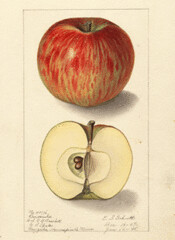
AppleBorovinka


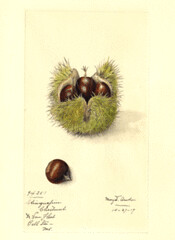
Chinquapin

Recent Cultivar Releases
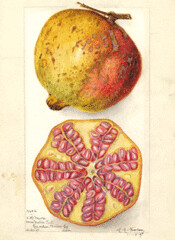
Pomegranate

Current Work in Pomology

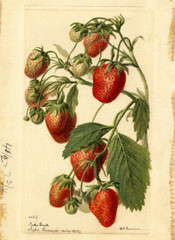
StrawbParkerEarle


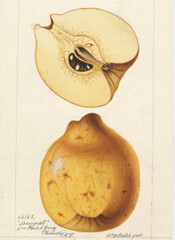
QuinceBourgeat


Atom Feed

Powered by Blogger

Add to Technorati Favorites

May 28, 2008

North Carolina Closing Experiment Stations?

This would be very upsetting if it happens:

Legislature looks at closing Castle Hayne agricultural research facility (StarNewsOnline.com)

Actually, it's more than just the Castle Hayne station--they're talking as many as seven of the 18 stations. I can't say I'm terribly surprised, as that's a lot of experiment stations for a state its size, but it's still disappointing. Castle Hayne has been an imporant center of fruit research, particularly blueberry breeding, for a long time, and it would be sad to lose that history. Hopefully the work going on there could be relocated.

Given the large and booming blueberry industry in North Carolina, and the success of the locally developed cultivars, it would seem a shame to hamstring the breeding program (and even if they move it, breeding programs for perennials rarely come through "moves" unscathed). The North Carolina program has released dozens of cultivars, many of which are important worldwide. 'O'Neal' remains the standard in early cultivars, planted on thousands of acres around the globe, while one of their first cultivars, 'Croatan', essentially saved the industry by introducing resistance to stem canker, and still represents a substanial part of the acreage.

Here's a presentation describing the NC State blueberry releases (they throw a few non-NCSU varieties in there, which is a little misleading, though it probably was less so when presented. The asterisks in the list on the last page distinguish the actual NC releases):

An Overview of Blueberry Releases from NCSU--and Other Cultivars of Interest to NC Growers (SmallFruits.org) PDF

Labels: , , ,

May 5, 2007

A few more links, while I'm at it

Just a collection of interesting fruit news links:

Stinkless Durian: Fans claim this takes the fun out of it, and I suspect it would. I also wonder what it does to the flavor, considering the significant link between aroma and taste? I'd be curious to learn the genetics of durian stink, too.

Bruce Mowrey: Another fruit breeder profile in the mainstream press (too bad they spell the name wrong). Bruce actually now heads the whole breeding department at Driscoll's, so he's not just in charge of strawberries.

Pierce's Disease Resistant Grapes: This is probably deserves a more complete write-up, given the fact that the glassy-winged sharpshooter (the vector for the disease) was recently found in Napa. That could be a very bad thing, though I'd bet it would have to be really, really bad before they started planting hybrid grapes.

Rutgers Blueberry Breeding: A little blurb on the Rutgers blueberry breeding program. The comment about blueberries needing to be blue reminded me of Paul Lyrene's pink blueberry, 'Florida Rose'. A cool idea, even if it hasn't caught on.

Indian Mangoes Finally Arrive: Coming soon to a table near you, through the wonder of irradiation!

Labels: , , , , , , , , , , ,

March 2, 2005

A Short History of Blueberries

Relatively few people these days are aware of just how short the history of blueberries as a cultivated crop really is. For most people they're just another entry on the list of standard fruit. But when many of our grandparents (or parents, depending who you are) were born, the only blueberries people were eating were harvested from the wild. (Actually, a lot of that still goes on today...and not just by people hiking in the woods. There are large commercial harvest operations in Maine and Canada using natural stands of Vaccinium angustifolium, the lowbush blueberry, even today).

Around the turn of the century, a rather unlikely pair began experimenting with wild blueberries. One was Frederick Coville, a USDA researcher in New Hampshire. In 1910, Coville published an article called "Experiments In Blueberry Culture" based on his work with wild plants, which drew the attention of a new cooperator, Elizabeth White. White, while not a scientist, was perhaps the more important in forming the blueberry into a commercial crop. Born into an extensive cranberry farming operation in New Jersey, White had already been cooperating with a USDA entomologist for a number of years on another study when she contacted Coville about a collaboration. She provided financing, land, and much of the physical effort involved in evaluating blueberry plants.

Virtually every commercial cultivar today can trace its roots to the ensuing partnership. White helped collect germplasm often naming wild varieties for their finders, while Coville made crosses and sent them to White's farm in New Jersey for evaluation. In 1916, the first commercial crop was produced.

More info on White and Coville's collaboration (focused largely on White), can be found here, and elsewhere on the web.

Particularly among the small fruits, the history of cultivation is pretty short. The commercial octoploid strawberry is only a little more than 200 years old, and raspberries and blackberries have historically been regarded more as weeds than as crops. It's only in the past couple generations that we've come to appreciate them.

If there's a lesson to be learned from this, it is that what we cultivate and eat today likely represents a tiny fraction of all the possibilities out there. People in other countries eat an entirely different subset of species than we do, and there are plenty of plants out there with potential that no one is cultivating yet. I'll try to post more on "potential" or "under-used" fruit crops in future posts...

Labels: , ,