.comment-link {margin-left:.6em;}

Fruit Blog Header.jpg
APPLES - BRAMBLES - CITRUS - GRAPES - NUTS - PAWPAWS - PEARS - PERSIMMONS - STONE FRUITS - STRAWBERRIES - FORUM

Cherimoya
My cherimoya, shortly before it became smoothie fodder.

Archive of past images


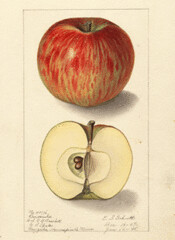
AppleBorovinka


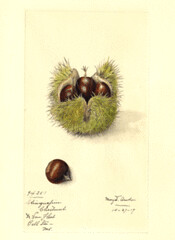
Chinquapin

Recent Cultivar Releases
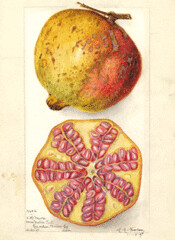
Pomegranate

Current Work in Pomology

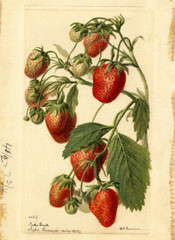
StrawbParkerEarle


QuinceBourgeat


Atom Feed

Powered by Blogger

Add to Technorati Favorites

July 6, 2008

Two quick things, courtesy of the New York Times

The first is this article on foraging for wild fruits. Some of the best fruit in the world isn't cultivated at all, and frankly, some things that I'd be utterly unimpressed with if I tasted them on farm somehow taste far better when you find them in the wild. (Just make sure you know what you're eating...)

In the Garden—Foraging for Berries, the Special on Nature's Produce Aisle

(New York Times)

The second is the fact that there is a New York Times "Fruit" RSS feed. (There probably is for every conceivable keyword, but I just discovered this just now). See it here.

(In other news, I'm trying out the new Flock web browser, which provides some integrated blogging and social networking tools. That's where the cool image came from next to the link--I'm way too lazy to do that on my own. I'm going to play around with it for a few days. Hopefully it doesn't disrupt things too much. Let me know if you think my posts have somehow become weird and unreadable because of it.)
Blogged with the Flock Browser

Labels: ,

January 11, 2007

Fruits and Nuts of the Jamestown Colony

A study funded by the National Geographic Society has recovered a vast array of 400-year-old plant remains from an old well used by the first inhabitants of the Jamestown colony in Virginia. The archaeological world is more excited about the three tobacco seeds, but of course here I'm just interested in the fruit.

Evidence indicates the colonists ate (and threw in the well):
blueberries
blackberries
persimmon
passionfruit
cherries*
grapes
Chickasaw plums
hickory nuts
beech nuts
acorns
black walnuts


* (I'm guessing from the context that these are chokecherries)

All of these would have been gathered from the wild. The colonists had brought seeds, cuttings, and small rooted plants of various species from Europe, but these would not have been bearing in the early years, and the struggling colonists would have had to subsist on whatever they could find (or trade with natives for). By 1629, however, Captain John Smith noted that "peaches, apples, apricots, and figs prosper exceedingly".

Labels: ,

May 11, 2006

Native Fruits from Oikos

Came across this place a while ago...I can't remember if I posted it, but it won't kill you to see it twice if I did. Oikos Tree Crops, located in Michigan, is an unusual take on the standard fruit nursery. Rather than the usual set of cultivars of the usual set of crops, Oikos features native and wild species. And, importantly, they deal primarily in seed propagated plants, meaning each individual is genetically unique. While not a good tactic for guaranteeing the very highest quality, it's still a good long-term strategy, maintaining genetic diversity and the tantalizing (albeit tiny) possibility of each seedling being the next great cultivar.

Anyway, I don't know much about this place beyond its catalog (though a friend of a friend recommends their 'Regent' saskatoon), but it's a fascinating concept. A few of these species I've never seen offered by a nursery, like the wild blueberry Vaccinium pensylvanicum, and the Dunbar's Plum (Prunus xdunbari...a hybrid of the beach plum (Prunus maritima) and the American Plum (Prunus americana)).

I'm going to try to get another Fruit Genetics Friday episode up later tonight, but I make no promises. I've got a meeting tomorrow in Jacksonville that I'm presenting at, and I need to be up early, and I'll be gone all day, so no sneaking in a post at work. Plus I've got to look respectable, which is always a bit of a stretch. So anyway, if not tonight, then maybe Saturday. I'm pretty flexible on the whole "friday" thing.

Labels: ,